





Tankless Water Heater Leaking? Where It's Coming From Matters

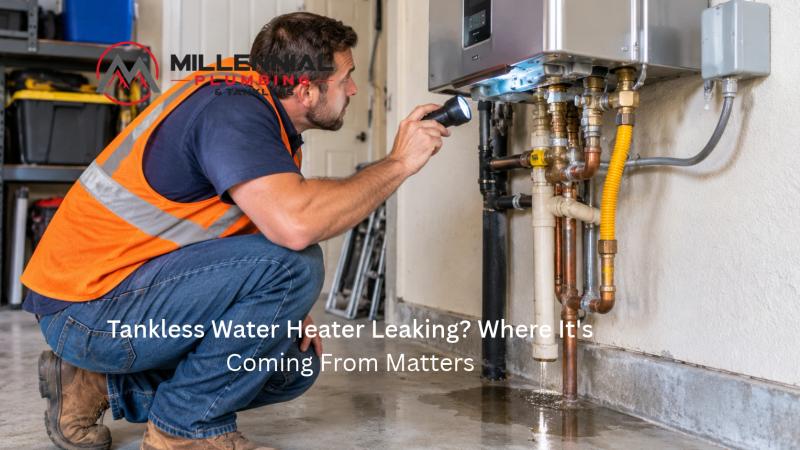
A tankless water heater leaking water almost always comes down to one of five sources: a loose fitting, a clogged or cracked condensate line, a pressure relief valve releasing pressure, mineral damage inside the unit, or a cracked heat exchanger. The first four are usually repairable. A cracked heat exchanger often means a new unit, and from where you're standing, all five leave the same puddle. Here's how to tell which one you have.
Some of that water may not even be a leak. On a high-efficiency model, a little dripping is normal, which is why the source of the water, not the amount, tells you what you're dealing with.
What Should You Do First When a Tankless Heater Leaks?
If water is actively running, stop the leak before you diagnose anything. A tankless unit doesn't store water, so it won't flood the room the way a failed tank can. But it's still connected to your main water supply, and a steady leak can keep going until someone turns it off.
- Close the cold water inlet valve. It's usually on the bottom of the unit, on the pipe feeding it. If that valve won't turn or still lets water through, shut off your main water line instead.
- Cut the power at the circuit breaker. That covers an electric water heater, and gas units too, since they still run on electricity for the controls and fan. If you have a gas model, turn the gas supply valve to off as well.
- If you smell gas, leave the house. Don't flip switches or try to find the source. Call your gas utility from outside.
- Dry the unit and the floor, then inspect. Wipe everything down, grab a flashlight, and note where fresh water shows up first.
Can you still use water while the heater is off? Yes. Once the unit is isolated, your cold water works normally and the leak is contained, so it can wait for a plumber instead of an emergency call. You just won't have hot water until it's fixed.
Is it an emergency? A steady stream, water near outlets or electrical connections, or anything spreading toward drywall or flooring needs attention today. Water damage from a slow drip builds quietly inside walls and subfloors, which is why even a small leak shouldn't sit for weeks. Across the U.S., the average homeowners insurance claim for water damage and freezing came to $15,400 between 2019 and 2023, according to the Insurance Information Institute.
Is It Normal for a Tankless Water Heater to Drip?

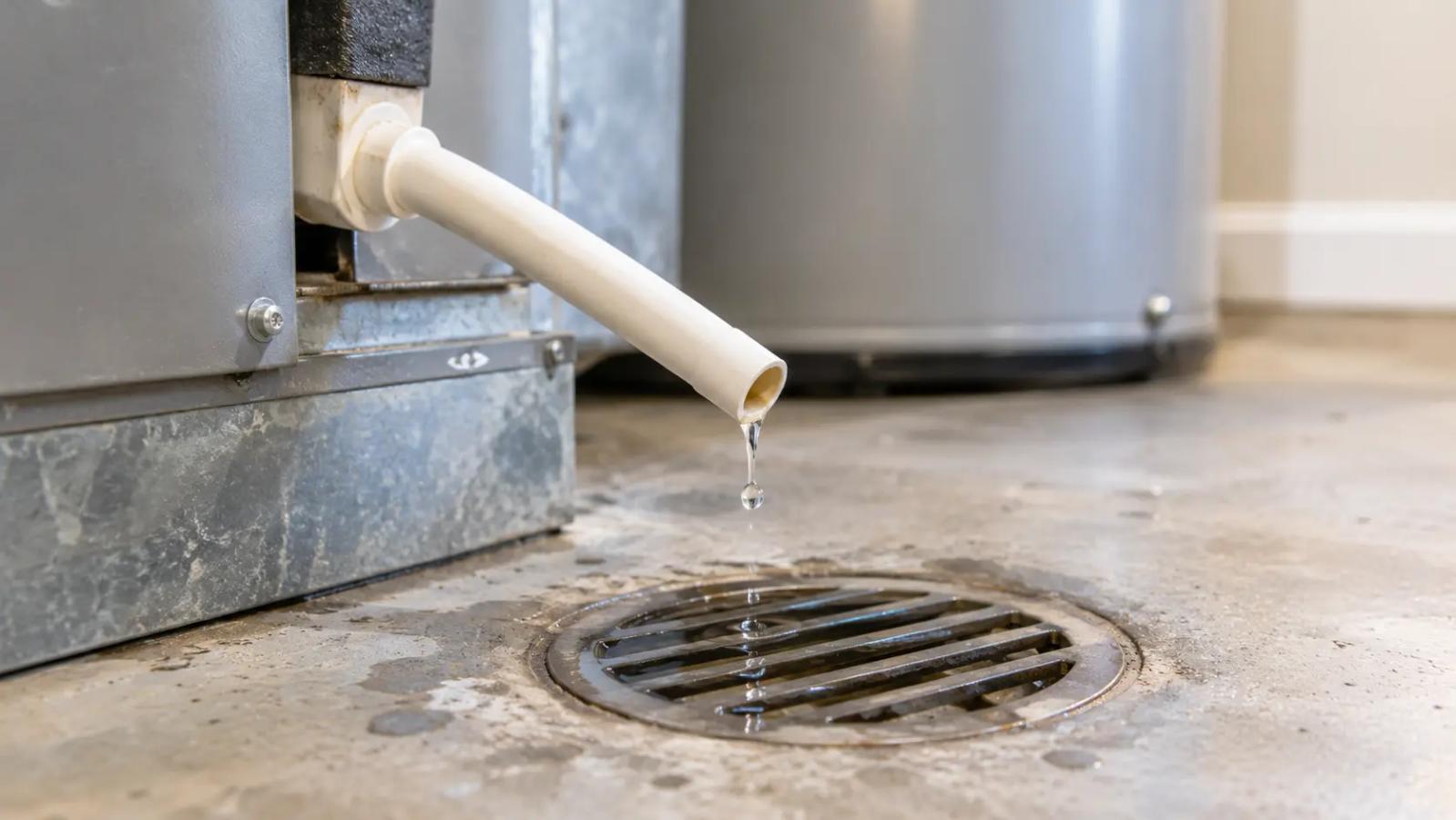
Yes, if it's a condensing model. High-efficiency tankless heaters pull extra heat out of their exhaust gases, and that process creates condensation inside the unit. A dedicated condensate line carries that water to drain, usually a small PVC or flexible tube ending at a floor drain or a pump.
Condensation comes out of the condensate line only. It shows up while the unit is firing or shortly after, and it stops once the heater sits idle. If you open a hot tap and the drip starts, then close it and the drip fades, that's normal operation.
A real leak is water coming from the unit somewhere else: the casing, the fittings, the floor under the cabinet. It keeps going when no one is using hot water. That's the line between "normal" and "call someone."
Not every tankless heater has a condensate drain, either. Non-condensing models vent hotter exhaust and don't produce this water at all, so if yours is non-condensing, any water around it is a leak.
Where Is the Leak Coming From on Your Tankless Unit?
Why Is My Tankless Water Heater Leaking From the Bottom?
This is the most common complaint, and the one with the widest range of causes. A tankless water heater leaking from the bottom can mean a condensate trap that's unseated or cracked, or an internal fitting that has worked loose. Sometimes the crack is higher up, and the water simply runs down inside the casing and drips out at the lowest point.
Start by tracing it. If fresh water appears at the condensate trap or its connection, that part can often be reseated or replaced. If it seems to come from inside the cabinet with no obvious external source, treat it as an internal leak and move on to the heat exchanger section below.
Tankless Heater Leaking From the Relief Valve
The pressure relief valve is a safety device. It opens to release water when pressure or temperature inside the system gets too high. A relief valve that drips is telling you something, and the fix is never to cap or plug it. Blocking that valve removes the one thing protecting the unit from building dangerous pressure.
The usual causes are high water pressure coming into the house, thermal expansion with nowhere to go, debris stuck in the valve seat, or a valve that's simply worn out. Check the pressure relief valve's discharge pipe first. If it keeps dripping, have a plumber test your home's water pressure before anyone replaces the valve. A new valve on a high-pressure system will just start dripping again.
Leaks at the Inlet and Outlet Water Connections
Look at the water connections where the lines meet the unit and at the isolation valves underneath. Heating and cooling cycles, plus everyday vibration, can loosen these over time. A loose connection or a worn washer is often the cheapest leak a tankless heater can have.
Many units also have service valves with hose thread caps, used for flushing. If one of those caps is loose or its washer is cracked, it'll drip right where you'd expect a bigger problem. Check the caps before anything else.
Leaking From Inside the Cabinet? Suspect the Heat Exchanger
This is the one you don't want. When water comes from inside the unit with every external connection dry, the likely culprits are a failed internal seal, a cracked water line inside the casing, or the heat exchanger itself.
Heat exchangers usually crack after years of scale and corrosion, or in a single hard freeze. Don't open the front panel on a gas unit to investigate. Behind it are gas connections and high-voltage parts, and opening it yourself can affect your warranty, so this is the point where a professional plumber should take over. If that's where your water is coming from, call 470-727-6292 and let a tankless specialist open it up.
Clogged or Cracked Condensate Line
If the leak is along the condensate line rather than at the unit, the line may be clogged, kinked, disconnected, or eaten through by acidic condensate, especially on installs without a neutralizer. When the condensate can't reach its drain, it backs up and finds another way out, often from the bottom of the heater. Clearing the line or replacing a corroded section usually solves it.
What Causes a Tankless Water Heater to Leak?
Knowing where the water comes from tells you what broke. Knowing why it broke tells you whether it'll happen again.

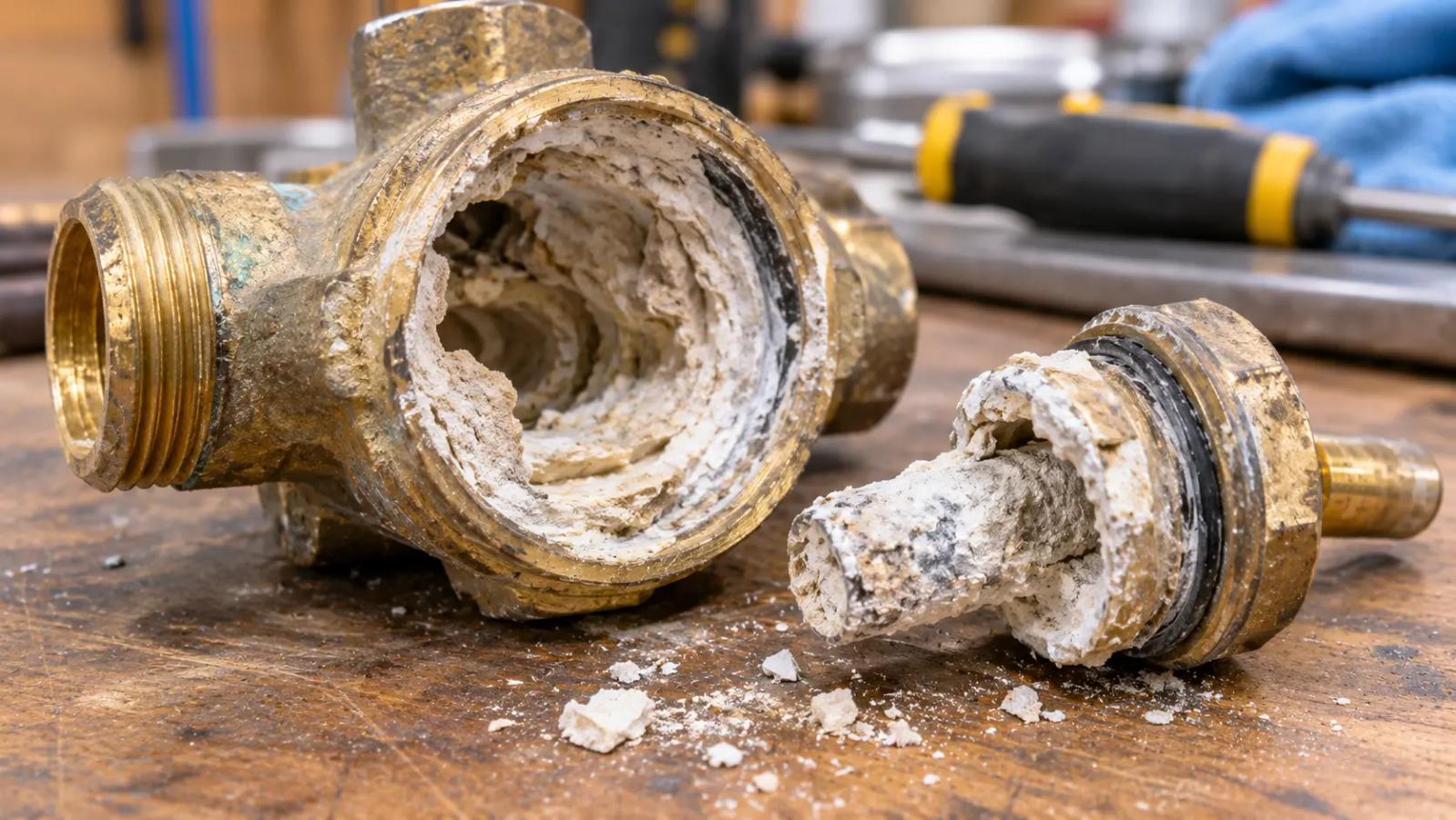
Mineral scale is a leading cause of internal damage, especially in homes with harder water or a unit that hasn't been flushed in years. Minerals in the water settle inside the heat exchanger and valves, and that mineral buildup restricts flow, overheats components, and speeds up corrosion. If your tankless hot water heater hasn't been serviced recently, sediment buildup is a strong suspect behind any internal leak. For most Dacula homes on county water, skipped maintenance is a bigger risk than the water itself. Homes on a private well tend to see more scale, so they need flushing more often.
High water pressure is another. Tankless units are built for a specific pressure range, and once it climbs past that, water pressure can put strain on every seal and fitting in the unit.
On a unit less than a year old, suspect the install before anything else. Loose plumbing connections, missing washers, and condensate lines run without a proper drain or neutralizer are behind a lot of water heater leaks in the first year. Call your installer first.
Georgia led the country in State Farm's frozen-pipe and water damage claims from August 2022 to August 2023, at roughly $100 million, so freeze damage deserves more respect here than people give it. Units mounted in garages, attics, or on exterior walls are exposed during cold snaps, and most rely on electric freeze protection. Lose power during an ice storm and that protection goes with it. Water expands as it freezes, which can crack internal lines or the heat exchanger, and the leak often doesn't appear until everything thaws.
Repair or Replace a Leaking Tankless Unit?
Most external leaks end with a repair. Fittings, washers, condensate traps, relief valves, and drain lines are all replaceable parts.
The heat exchanger is the dividing line. A cracked heat exchanger on an older unit usually makes replacement the smarter call, because it's one of the most expensive parts in the heater. On a newer unit, check your warranty first. Heat exchangers often carry their own warranty term, whether your unit is a Navien, Rinnai, or Rheem tankless water heater. Call the manufacturer's tech support line with your model and serial number to find out what's covered.
Other signs the unit is near the end: frequent error codes, a noticeable decrease in hot water temperature or flow even after flushing, repeated repairs in a short span, or rust and corrosion on internal parts. One of those alone is a repair. Several together usually means you're paying to keep a failing unit alive.
How Can You Prevent Tankless Water Heater Leaks?
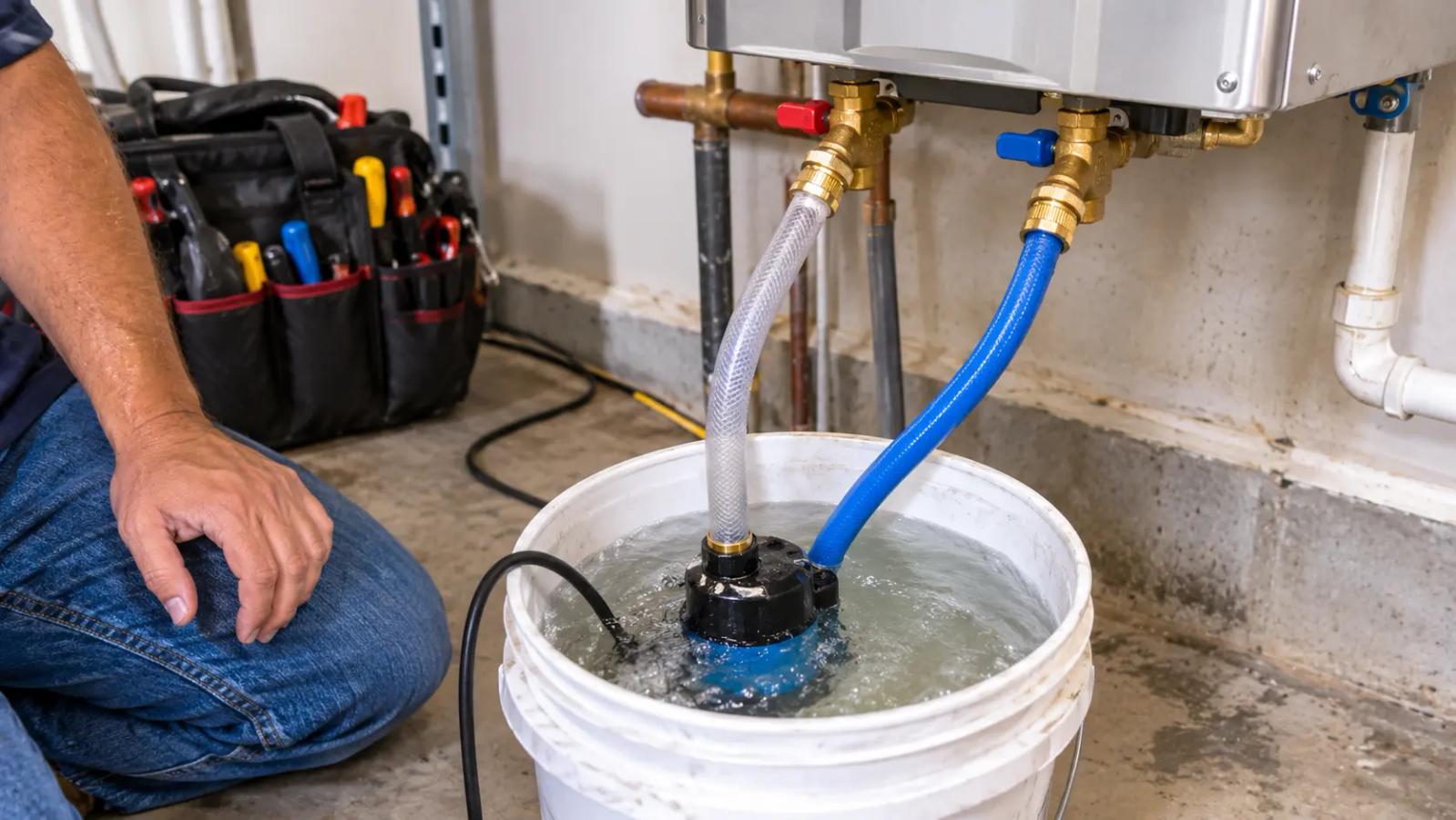
Regular maintenance includes flushing the system to remove scale, usually once a year and more often with hard water. A plumber connects a pump to the service valves and circulates a descaling solution through the heat exchanger. That clears out the scale that slowly chokes it from the inside, long before it shows up as a puddle.

Beyond flushing, check the condensate trap and line for cracks or clogs, clean the inlet water filter screen, and have your incoming water pressure tested if your relief valve has ever dripped. Each of those habits is cheaper than repairing water damage after the fact.
For units in garages or on exterior walls, cold weather prep matters too: keep the power on so the built-in freeze protection can work, and insulate any exposed water lines. For the rest of your cold-season checklist, including flushing and relief valve testing, see our guide to winter water heater maintenance in Georgia.
Need Tankless Water Heater Repair in Dacula?
Can any plumber fix a tankless water heater? Not always. Tankless units combine plumbing, gas, venting, and electronics, and plenty of general plumbers and home repair pros don't work on them regularly. Some homeowners end up calling an HVAC technician for the same reason. What you want is an expert who specializes in tankless systems and can diagnose and repair the issue without guessing.

Call a professional the moment you notice water inside the cabinet. The same goes if the relief valve keeps dripping, you smell gas, the unit throws error codes after a leak, or you've tightened what you can and water still appears.
A little water under a tankless heater can mean nothing at all. The mistake is assuming which kind you have.
Tracing leaks like this is the work Phillip has been doing for 25 years. Millennial Plumbing & Tankless is a family-owned plumber in Dacula, GA, and tankless systems are our specialty, from tracing a leak to its source to full water heater installation and repair. Call 470-727-6292, Monday through Saturday, 6am to 9pm, and have your leaking tankless heater traced to its source. Close the inlet valve, kill the power, and we'll get your water heater back to doing its job: hot water on demand.