





Tree Roots in Your Sewer Line: Signs & Causes

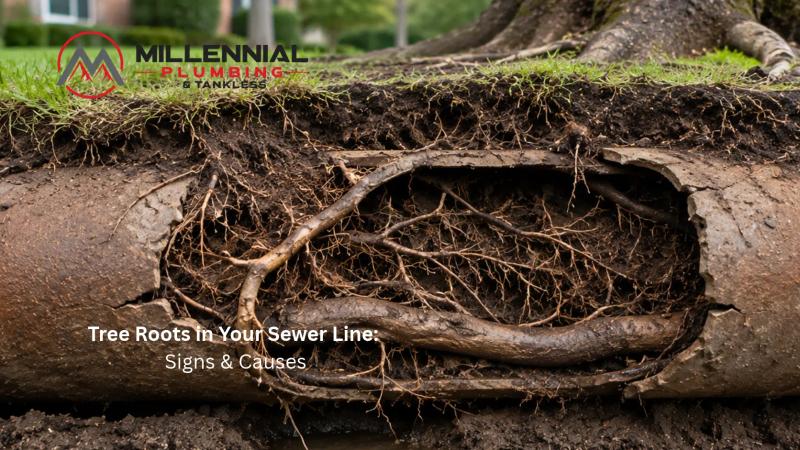
Tree roots get into a sewer line through a crack that Georgia's red clay soil helped create, not through solid pipe. That's the part most Dacula homeowners never hear until it's too late: the roots aren't the real problem. They're a symptom of something else, and figuring out what that something else is matters more than clearing the clog in front of you.
Most homeowners treat that first slow drain like a nuisance instead of a warning, and that's usually the expensive mistake.
How Do Tree Roots Get Into a Sewer Pipe?
A healthy pipe doesn't let roots in, and that single fact changes how you should think about the whole problem. Tree roots don't punch through solid PVC or cast iron. As urban foresters explain, a root can only exploit a crack that's already there, it can't create one on its own. They find an opening that already exists. Maybe it's a hairline crack from ground shifting, or a loose joint where two sections meet. Sometimes it's corrosion eating through an old cast iron line, or a loose connection where a branch line ties into the main sewer line.
Once a root hair finds that opening, it follows the moisture and nutrients leaking out of the pipe, because sewage is exactly what a root is looking for. From there it thrives. Roots don't wrap around a pipe and crush it. They grow inside it, branching and thickening in the warm, wet environment, until what started as a hair-thin intrusion becomes a root mass that catches every bit of toilet paper, grease, and debris flowing past it.
This matters because it tells you what you're actually dealing with. If you have tree roots in your sewer, you had a vulnerable pipe before you had a root problem. Clearing the roots is step one. Understanding why they got in is what stops you from doing this again in two years.
Signs You Have Tree Roots in Your Sewer Line
Root intrusion rarely comes with a single obvious symptom. It shows up as a pattern, and the pattern is what separates a simple clog from a main line problem:
- Multiple drains running slow at the same time, especially the lowest fixtures in the house
- Gurgling sounds from a toilet or sink when you run water somewhere else in the home
- A sewage odor near a floor drain or in the yard, especially after rain
- Toilets that need plunging more than once a week with no clear cause
- A patch of unusually green, fast-growing grass over the sewer line's path
- Slow drainage that gets worse over weeks instead of appearing overnight
- A visible dip or soft spot in the yard, which can be an early sign of a collapsing pipe
If any of that sounds familiar, a camera down the line beats another guess. See exactly what's happening in your sewer line: 470-727-6292, before the problem writes its own bigger bill.
Why Tree Roots Are So Common in Gwinnett County
Dacula and the rest of Gwinnett County have exactly the conditions roots love: mature oaks, maples, and pines throughout established neighborhoods, and Georgia's red clay soil underneath it all, which swells during wet stretches and pulls back tight when it dries out. That constant movement is what stresses old pipe joints until they separate or crack in the first place, especially in homes old enough to have clay or cast iron sewer lines that have had decades to take the beating. A U.S. Forest Service review of sewer systems found that root intrusion is responsible for more than half of all sewer blockages nationwide, and neighborhoods with this exact mix of clay soil and mature trees are where that number tends to run highest.

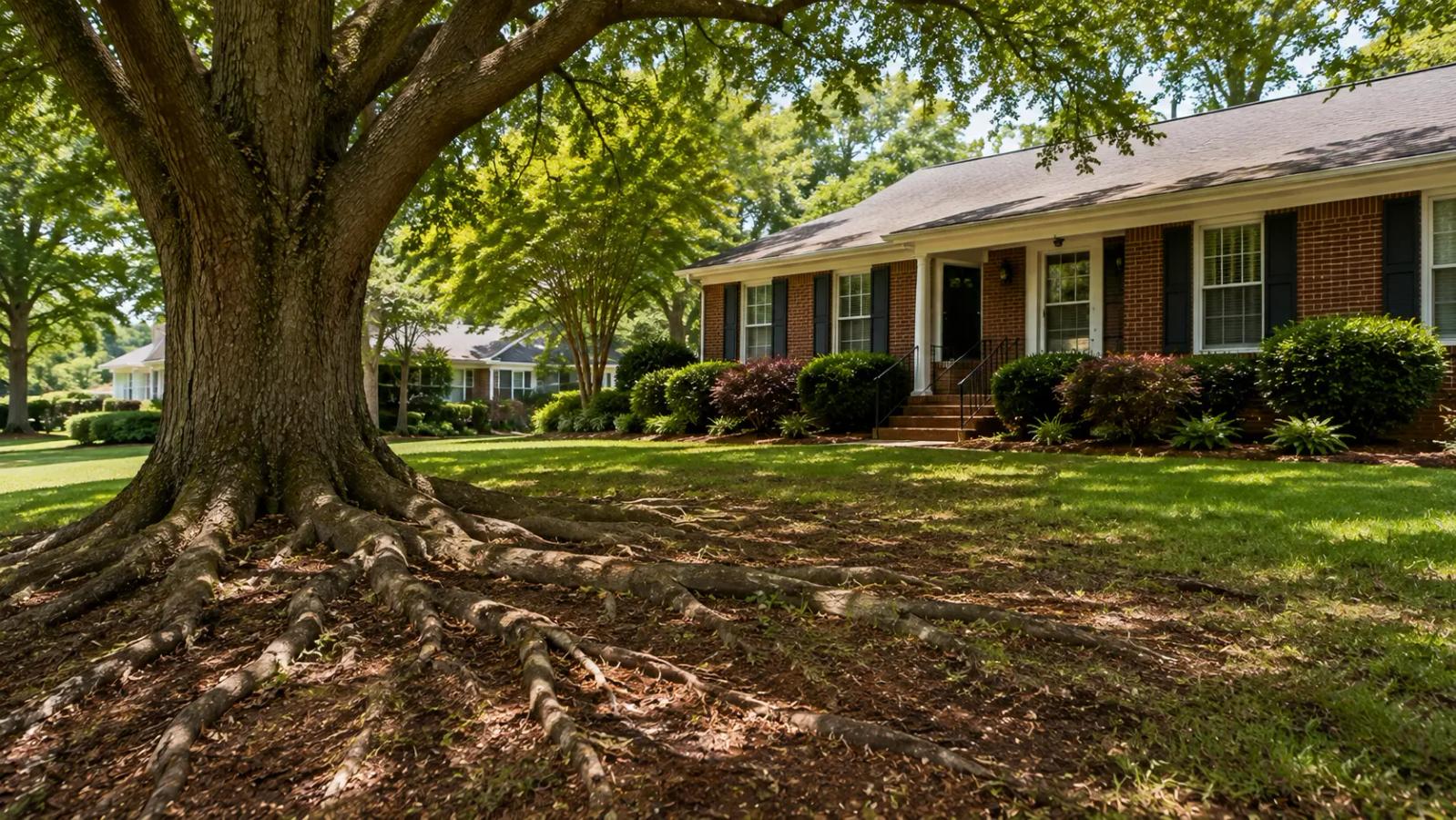
Roots don't need to be planted directly over the line to reach it. Root systems commonly spread two to three times wider than the tree is tall, which means a mature oak thirty feet from your house can still have roots exploring the soil around your sewer line. If your home was built before PVC became standard and you've got established trees anywhere near the yard, root intrusion isn't a matter of if. It's a matter of when someone finally calls a plumber to find out why the drains in your home won't cooperate, and it's exactly the kind of call a local plumber who's worked on Gwinnett County homes for years can usually diagnose within minutes of getting a camera in the line.
What Happens If You Ignore a Root-Clogged Sewer Line
A slow drain feels like a minor inconvenience, so it gets ignored more than almost any other plumbing issue. That's the mistake. Left unaddressed, what starts as a partial blockage becomes a full one, and backups don't stay polite. Once a line is blocked, wastewater has nowhere to go but back into your home, usually through the lowest drain in the house.
The pipe itself is also on a clock. Roots pressing against an already-cracked pipe accelerate the damage, and a small crack left untreated can become a collapsed section that requires excavation instead of a same-day fix. Sewer gas escaping through a compromised line is a health issue on top of a plumbing one. The point here is simple: "I'll deal with it later" is usually the most expensive sentence in this entire situation.
DIY Root Removal: What's Actually Safe to Try
There's a real DIY tier here, and it's worth being honest about where it ends. A basic drain cleaner or a DIY snake can sometimes clear a partial clog near a fixture, but neither one touches roots that have taken hold deeper in the main line. Root killer products containing copper sulfate crystals or foaming root killer are sold specifically for this. Worth trying on a fresh, minor intrusion. Used correctly, they can slow root growth inside a pipe without harming the tree itself.
Where DIY stops being useful is anywhere past "the toilet is slow." If you're seeing the pattern described above, a home root killer treats the symptom for a few months at best. It doesn't cut the root mass out of the pipe, and it does nothing for the crack or joint failure that let the roots in to begin with. Roots will return to the same opening every time, often thicker than before, because the underlying vulnerability in the pipe hasn't gone anywhere.
The honest line: if a single fixture is sluggish, a store-bought treatment is a reasonable first move. If multiple drains are involved, or the same drain's been treated once already and slowed down again, DIY has done what it can. That's a job for a plumber, not another bottle off the shelf.
How a Professional Clears Roots From a Sewer Line
A proper fix starts with a sewer inspection. A plumber runs a small camera through the line to see exactly where the root mass sits, how bad the damage is, and whether the pipe itself needs attention beyond just clearing the blockage. This is the step most DIY attempts skip entirely, and it's the difference between fixing the actual problem and treating it again next year.
From there, the tool depends on what the camera shows. A mechanical root cutter or auger with a cutting head can physically cut through root growth inside the pipe. For a heavier root mass, high-pressure water through a hydro jet clears the line and scours the pipe walls clean in a way a standard cable snake can't match. In cases where the pipe itself has failed, meaning cracks, sagging, or a section too compromised to hold, trenchless repair can replace the damaged section with new pipe without fully digging a trench across your yard, which means you keep your landscaping intact and you're not staring at a torn-up yard for a week while a crew works.
Which approach makes sense depends entirely on what the inspection finds, which is exactly why skipping that first step almost always costs more in the long run.
How to Keep Tree Roots From Coming Back
Cutting the roots out solves today's blockage. Preventing round two means dealing with the pipe and the trees around it, not just the symptom. If your home was built decades ago with clay or cast iron sewer lines, an aging pipe with weak joints is going to keep attracting roots no matter how many times you clear them, because the actual vulnerability is still sitting in the ground.
A few things genuinely help. Keeping new trees at least 10 feet from any known sewer line path gives roots less of a head start, and a physical root barrier installed between an established tree and the line can redirect growth away from the pipe without having to remove the tree itself. An annual or twice-yearly camera inspection catches a new intrusion while it's still a five-minute fix instead of a weekend project. And if a section of pipe keeps failing in the same spot, replacing that stretch with modern PVC, which uses fewer, tighter, sealed joints than old clay or cast iron, is usually the move that actually ends the cycle instead of just pausing it, so this stops being a call you make every couple of years.
When to Call a Plumber for Root Intrusion
If you've read this far, there's a decent chance you're already dealing with one or two of the signs above, not just researching out of curiosity. That instinct is worth trusting. A sewer line problem doesn't fix itself, and every month it sits unaddressed is another month the root mass has to grow and the crack it found has to widen.
Millennial Plumbing & Tankless has spent 25 years working on homes across Dacula and Gwinnett County, and a root-clogged sewer line is one of the most common calls that comes in looking like something else entirely. You don't have to guess which one you're dealing with. Book the camera inspection and find out in under an hour, before a slow drain turns into a bigger job.
Schedule your inspection: 470-727-6292, or reach out through the site to have Phillip's team take a look.