





How Much Does a Water Line Replacement Cost in Dacula?

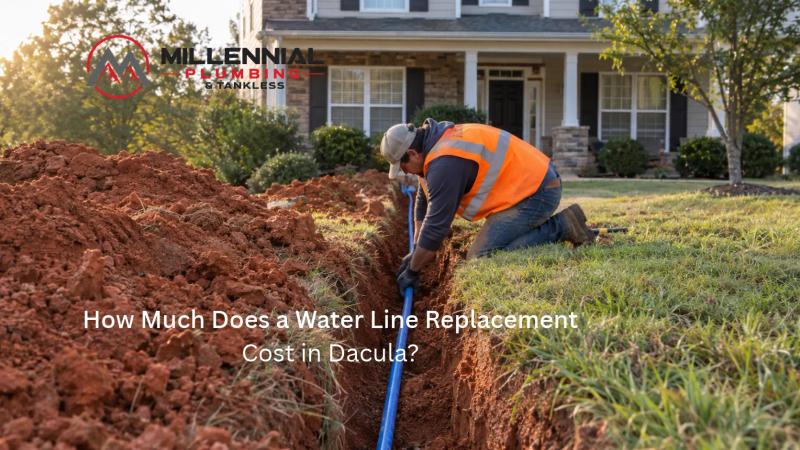
Around Dacula, replacing a main water line typically runs $543 to $1,705 for a short run, with an average cost of about $1,115 based on Atlanta-area cost data. National figures show longer runs and lines under a driveway pushing to $5,000 or more.
Before you budget your water line replacement cost, there's a Gwinnett County rule most homeowners only learn once water is pooling in the yard: the county's responsibility stops at the meter, and everything after it is yours.
Who Is Responsible for the Water Line in Gwinnett?
People use "water main," "main water line," and "service line" as if they mean the same thing. They don't, and the difference decides who pays.

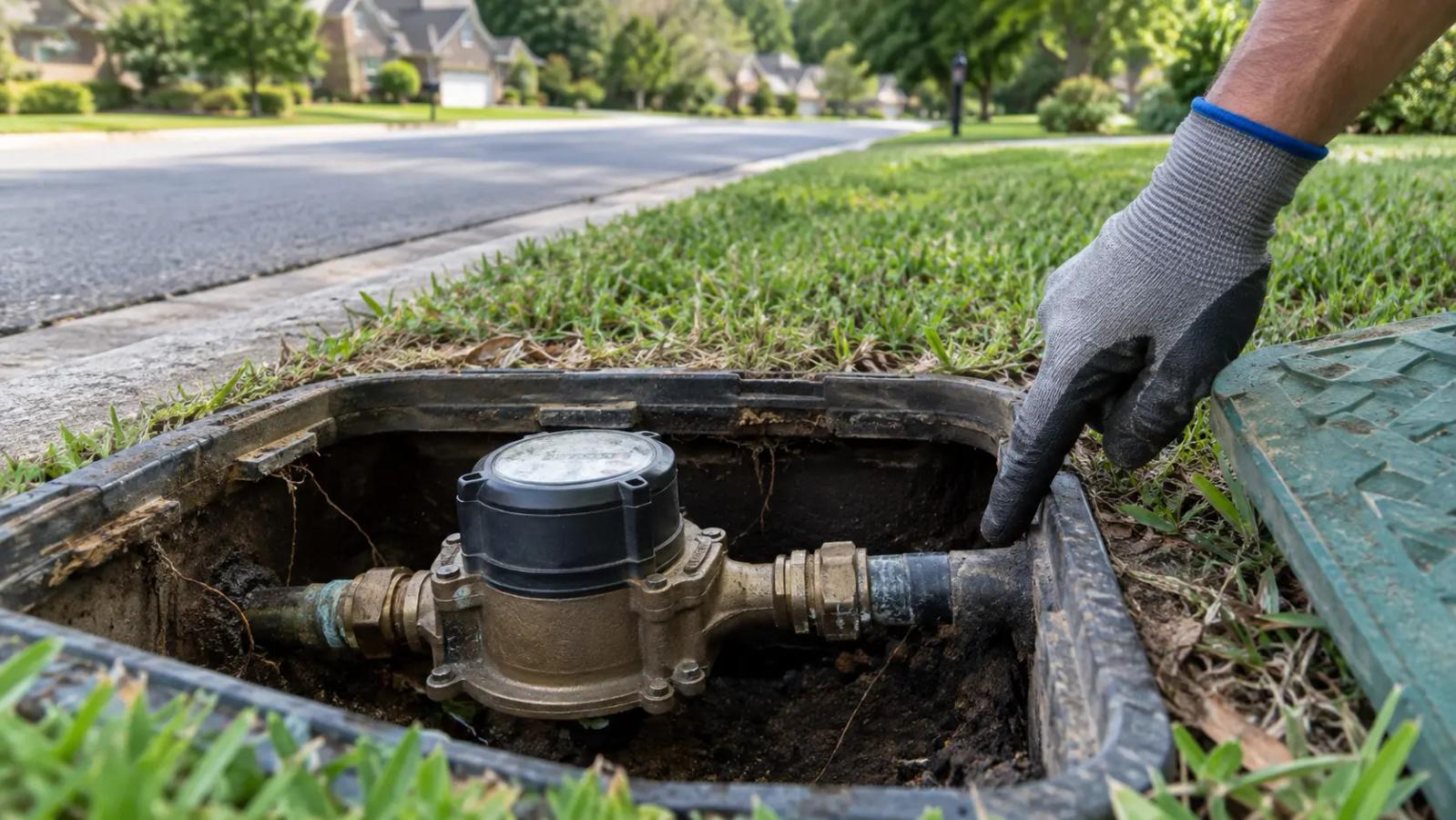
The water main is the public pipe running under the street. Your water service line is the pipe carrying water from the meter to your home. Gwinnett County Department of Water Resources maintains the water main, the short pipe connecting it to your meter, and the meter itself. The line running from the meter to your house belongs to you, along with every foot of plumbing inside, so fixing a leak on that stretch falls to you and your plumber.
Gwinnett also warns homeowners to be cautious when a plumber claims the county will reimburse work done on the homeowner's side. Reimbursement only applies under specific conditions. If someone uses that promise to close a sale, treat it as a reason to get a second opinion.
If your home runs on well water instead of municipal water, the whole system is private, and the costs work differently.
What Affects Water Line Replacement Cost?
How Water Line Length Affects the Price
Length is the biggest single driver because every other cost gets multiplied by it. Per-foot pricing covers the pipe, the labor to place it, and the digging or boring to get it there. A house set close to the street with the meter near the front corner is a different job from a home at the end of a long driveway on a wooded Dacula lot.
Before you compare quotes, walk from the meter box to where the line enters your house. That rough length of the pipe run tells you more about your final cost than any national average. Published averages, including the ones in this guide, are market data, not a quote. Your yard is the variable they can't see.
How Driveways and Landscaping Raise the Cost
Grass is cheap to put back. A driveway, sidewalk, or mature landscaping is not. If the line runs under concrete, someone either has to cut and patch it or bore underneath it, and cost guides consistently flag these crossings as a major add-on.
How Red Clay and Line Depth Affect Cost
Gwinnett's red clay swells when it's wet and shrinks when it dries, and that constant movement puts stress on the buried pipe. The clay is naturally acidic too, and acidic soil speeds up corrosion on metal lines, galvanized steel most of all. On top of that, the clay makes digging slower and messier than loose, sandy soil.
Depth works in your favor here. Georgia's plumbing code requires exterior water supply piping to sit at least 6 inches below the frost line and at least 12 inches below grade. Northern states bury water lines several feet down, deep below the frost line to prevent freezing. Our frost line is shallow by comparison, so depth usually adds less to the bill here than it does in colder climates.
PEX, PVC, or Copper: Choosing the Pipe Material
The pipe material matters less than most people expect. PVC and PEX are the most common choices for main water lines around Atlanta. PEX, or cross-linked polyethylene, is flexible, resists corrosion, and runs in long continuous lengths with fewer joints underground, which means fewer places for the next leak to start. PVC keeps material cost low on cold-water service lines. Copper lasts but costs more per foot. Your plumber should be able to explain why they're recommending one over another for your soil and your line.
Should You Replace the Main Water Shut-Off Valve Too?
Replacing the line is the natural time to look at the valve that controls it. Replacing a main water shut-off valve runs $250 to $600 in published cost data. If yours is decades old and stiff, replace it while the water is already off, so the next time something leaks you can actually shut the house down.
Trenched or Trenchless: Choosing the Replacement Method
The traditional approach digs a trench from the meter to the house, lays the new pipe, backfills, and restores the yard. Trenching averages $50 to $200 per linear foot nationally, usually the lower rate, but restoration carries the hidden cost: new sod over a scar across the front yard, or a patched strip through the driveway.

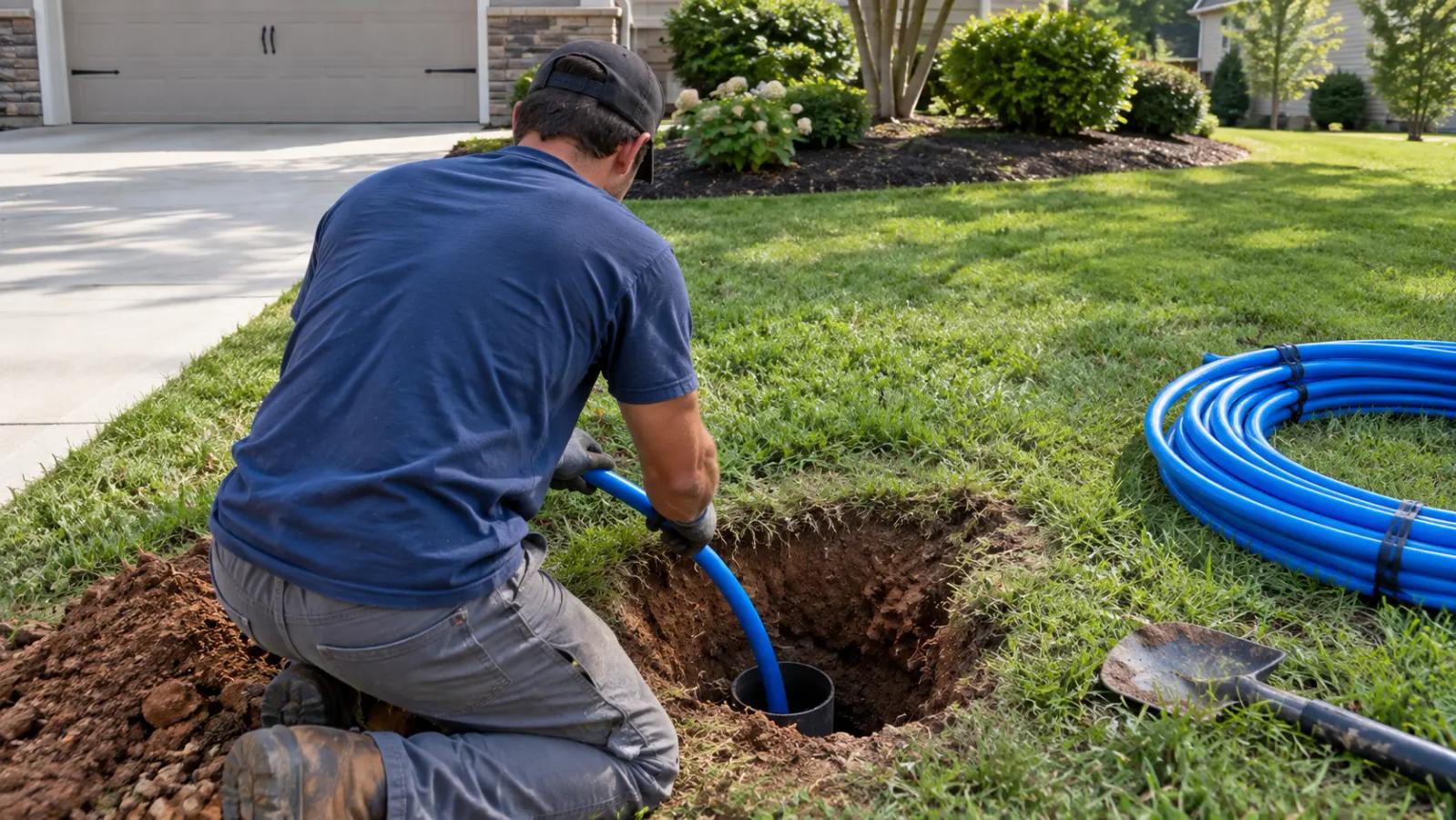
Trenchless replacement bores a path underground between an entry point near the meter and an exit near the house, then pulls the new line through. The trenchless method runs $70 to $250 per linear foot. It costs more for the work itself but spares you the digging, which is why the two ranges overlap so much. When the line runs under a driveway or through landscaping you care about, trenchless often closes that gap once restoration is counted in the total cost. Either way, digging or boring and restoring the yard take up most of the job, so ask before work starts how long your water will be off.
Atlanta-area data puts most replacements at $50 to $150 per linear foot, and trenchless is the local norm because the soil here bores well.
Pipe bursting is a trenchless variation: a bursting head breaks apart the existing line as it pulls new pipe into its place. Pipe lining works differently. It coats the inside of the old pipe with resin instead of replacing it, and some homeowners add a water filtration system afterward even though those resins should be safe for drinking water. Lining only makes sense on a line that's still structurally sound.
You'll see the same methods offered for sewer line work, which is why some quotes bundle the two. Keep them separate when you compare prices.
How Often Should Water Lines Be Replaced?
There's no set schedule. Industry figures show most main water lines last 50 to 100 years, depending on the material: PEX lines up to about 50 years, copper up to 100. Older galvanized steel lines corrode from the inside and often need replacing well before that.
The age of your house is a starting clue, but in Dacula it rarely settles the question. Most homes here were built in the 1990s and 2000s, so many original service lines are still well short of those lifespans. What the line is made of, and the acidic clay around it, usually tells you more than the calendar does. If you're not sure, a plumber can identify the material where the line enters the house or at the meter box.
Tree roots working toward a slow leak and a line buried too shallow can also wear a pipe down faster than its material suggests.
Signs Your Main Water Line Is Failing
Leaks in buried water lines hide well, but they leave clues. A drop in water pressure at every faucet at once points at the main line. So does a strip of grass that stays green or soggy through a dry week, especially along the path from the meter to the house.

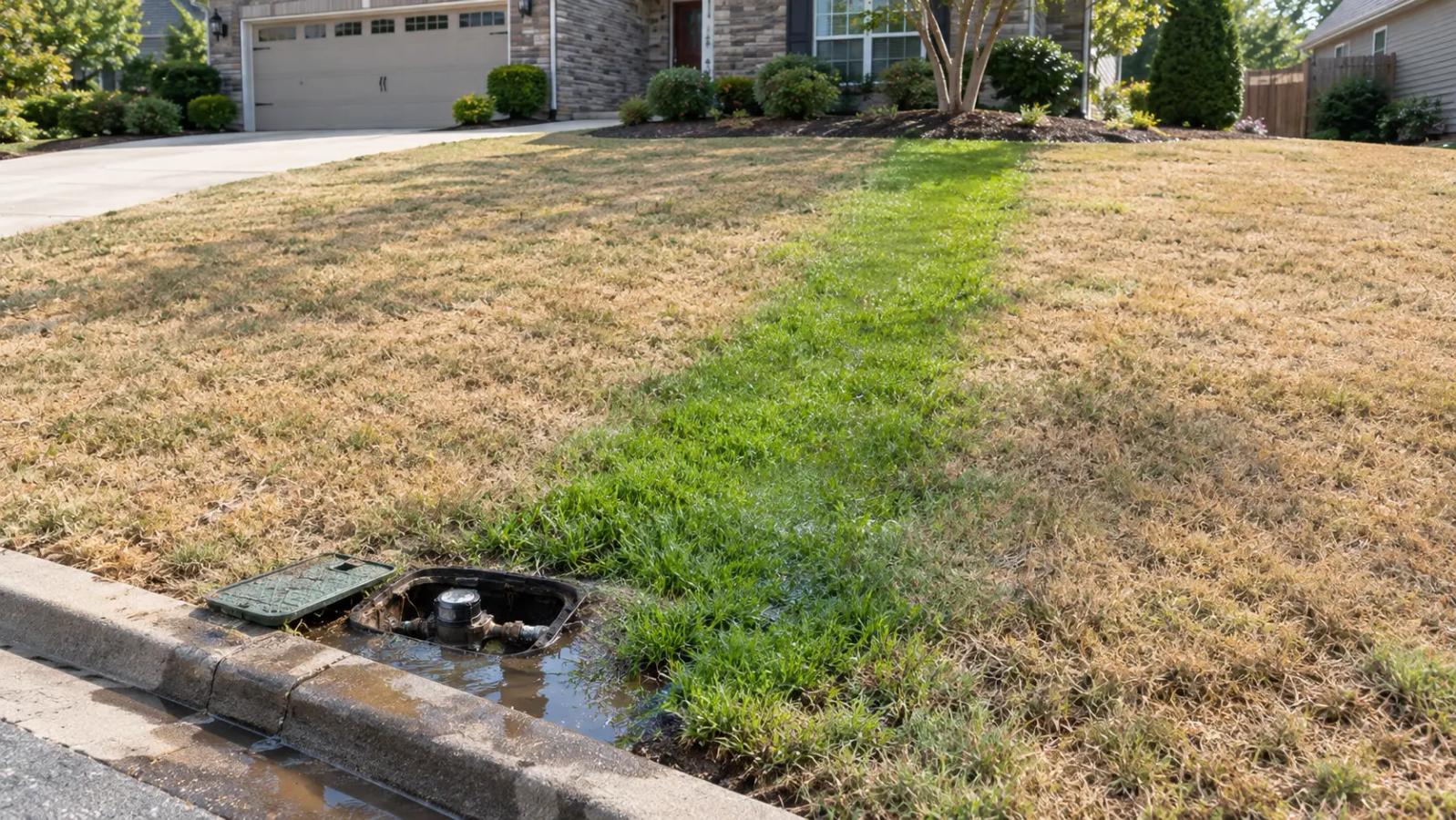
High water bills with no change in how you use water are often the first thing homeowners notice. You can test it yourself: turn off every tap, appliance, and irrigation zone, then check the meter. If the leak indicator is still moving, water is escaping somewhere between the meter and your fixtures.
Discolored or rusty water coming from several taps can point to corrosion inside an older metal line. None of these signs proves you need a new line, but any one of them is reason enough to have it inspected before a slow leak turns into a soft spot in the yard.
Should You Repair or Replace Your Water Line?
A single leak on an otherwise healthy line is a repair job. Around Atlanta, repairs average $675, with most homeowners spending $200 to $2,000.
The math changes when leaks start repeating. A second leak within a year or two usually means the pipe is failing along its length, not in one spot, and every repair digs up the same yard again. At that point, and especially once repair bills climb past half of what a new line would cost, replacing the line once is usually the better spend.
What Should a Water Line Replacement Quote Include?
If you already have a number in hand and you're wondering whether it's fair, read what the quote says. A vague quote is harder to judge than a high one.
A solid quote names the replacement method, the pipe material, and roughly how many feet of line are going in. Look for who pulls the permit and handles inspection. Then check the yard: is putting your driveway and lawn back included, or billed separately? The best quotes also say whether the shut-off valve is being replaced and whether the new line gets pressure tested before it's buried.
Get at least two estimates for water line work, and compare them line by line. A higher quote that includes restoration can cost you less than a lower one that leaves a trench across your yard. Anything that shows up later as an additional cost should have been on the paper from the start.
Does Homeowners Insurance Cover Water Line Replacement?
Usually not. Standard home insurance policies generally don't cover an underground water line that failed from corrosion or old age, though coverage varies by insurer and some sell a service line endorsement as an add-on. Companies like HomeServe also sell standalone service line protection plans.
Before you pay out of pocket, call your insurer and ask two specific questions: does the policy cover the underground line from the meter to the house, and does it cover damage the leak caused inside or around your home?
Can Gwinnett Adjust Your Water Bill After a Leak?
If a hidden leak ran up your bill before anyone found it, Gwinnett County Department of Water Resources offers a Leak Adjustment Request Form through its Customer Care team. The rules are tight.
The county adjusts one billing cycle, only once in any 12-month period, and the repair has to happen within three months of the jump in usage. You then have three months from the repair date to file, so keep your plumber's invoice handy. Keep paying your bill in full while the request is reviewed, since unpaid balances can still pick up late fees. It won't pay for the new line, but it may take some of the sting out of the bill the old one left behind.
Common Questions About Replacing a Main Water Line
How Long Does It Take to Install a New Water Line?
It varies with the replacement method, the length of the line, and how much of the yard needs restoring afterward. Once the new line is connected, ask your plumber to flush air and debris out of the system, which protects your fixtures and your water heater.
Do Plumbers Replace Water Lines?
Yes. A licensed plumber handles the line from the meter to your home.
Need Water Line Replacement in Dacula?
If you're pricing a water line replacement, you're probably past wondering whether something is wrong. The numbers above get you close. What's under your yard decides the rest.
Phillip brings 25 years of hands-on plumbing experience to every Millennial Plumbing & Tankless job, and he'll walk the line with you and explain what he finds before any work starts. Call 470-727-6292 and know what your line needs before anyone starts digging.