




How to Unclog a Drain (Which Method Fits Your Clog)

The best way to unclog a drain is to match the tool to the clog: a plunger for a sink or tub with standing water, a plastic hair snake for a shower, and a drain snake or a cleaned P-trap for anything stubborn. Two of the most popular home fixes can make the problem worse, and one of them is probably sitting under your sink right now.
Start with the gentlest method that fits your drain, and stop when the water runs free.
What Kind of Drain Clog Do You Have?
Look at which drain is slow and what usually goes down it. Hair and soap film clog showers and bathroom sinks. In the kitchen, it is usually grease and food scraps. Toilets are the odd one out: too much paper, or something that should never have been flushed.
Two quick checks narrow it down:
- One fixture is slow: the clog is local, and the methods below should reach it.
- Several fixtures are slow, you hear gurgling, or water rises in a second fixture when you run the first: the blockage is deeper, in the main line. Skip ahead to when to call a plumber.
Which Method Works for Which Drain?
Pick the row that matches your drain.
| Drain | Best first move | If that fails | |
|---|---|---|---|
Kitchen sink | Cup plunger, then hot tap water with dish soap | Drain snake, then clean the P-trap | |
Bathroom sink | Clean the pop-up stopper, then plunge | Plastic hair snake, then clean the P-trap | |
Shower or tub | Plastic hair snake | Plunger with the overflow blocked, then a drain snake | |
Toilet | Flange plunger | Toilet auger |
How Do You Unclog a Drain With a Plunger?
Use a cup plunger on sinks and tubs, and make sure it seals. A plunger needs water over the cup to push against, so add a few inches of water if the basin is empty.
- Block the overflow opening with a wet rag so the pressure goes down the drain instead of out of the vent.
- Set the cup flat over the drain and press down to seal it.
- Pump firmly for about 30 seconds without breaking the seal.
- Pull the plunger off and see whether the water drops. Repeat a few times if it moves a little.
In a double kitchen sink, plug the second drain with a rag first, or the pressure escapes there.
How Do You Use a Plastic Hair Snake?
A slow shower is almost always hair. A plastic hair snake is a thin, flexible strip with barbs along its edges, and hair is what it catches.
- Remove the drain cover or stopper.
- Push the strip down the drain as far as it goes.
- Pull it back slowly. The barbs drag hair and gunk up with it.
- Repeat until nothing more comes out, then run hot tap water for a minute.
How Do You Use a Drain Snake?
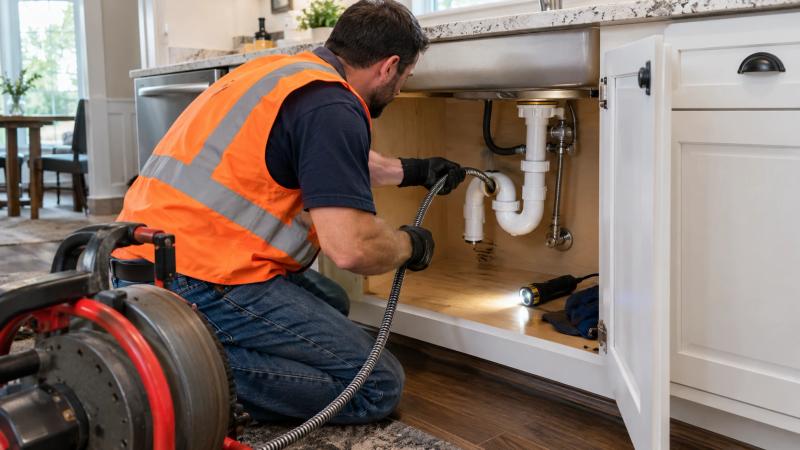
A drain snake, also called an auger, is a coiled cable you feed into the pipe and crank to break up or hook a blockage. Use it when a plunger and a hair snake haven't worked.
- Feed the cable into the drain until you feel resistance.
- Tighten the thumbscrew, then crank the handle to work the tip into the clog.
- Push forward gently as you turn. Forcing it can scratch the pipe or kink the cable.
- Pull the cable out slowly, wipe off what comes with it, and flush with hot tap water.
If the cable runs the full length with no resistance and the drain is still slow, the clog is probably past its reach.
How Do You Clean a P-Trap?
When a plunger and a snake do nothing, the clog is often sitting in the P-trap, the U-shaped pipe under the sink that catches whatever the drain carries down.
- Put a bucket under the trap to catch the water.
- Loosen the slip nuts on both ends by hand, or with pliers if they are stuck.
- Pull the trap away and empty it into the bucket.
- Clear out the buildup, rinse the trap, and check the washers.
- Reassemble, tighten the nuts snugly by hand, and run water to check for leaks.
If it leaks at a joint, snug the slip nut a little more or replace the washer. Do not over-tighten plastic fittings.
Does Baking Soda and Vinegar Unclog a Drain?
Not a stubborn clog. It can loosen a light film of soap or grease, and it freshens a drain, but the fizz is too gentle to break up hair or a packed blockage.
If you want to try it on a slow drain, pour ½ cup of baking soda down the drain, follow it with ½ cup of white vinegar, plug the drain, and wait about 30 minutes. Then flush with hot tap water. If the water still stands afterward, move on to a plunger or a snake instead of repeating it.
Does Dish Soap Really Unclog a Drain?
On a greasy kitchen sink, it can help. A squirt of dish soap works on fat the way it does on a pan. It cuts the fat so it can move along. Add a generous squirt, follow it with hot tap water, and give it a few minutes.
It won't dissolve hair or a solid blockage. Treat it as a first step for grease, and plunge if it doesn't work.
Should You Pour Boiling Water Down a Clogged Drain?
Hot tap water is the safer choice. Boiling water is 212°F, and PVC drain pipe and fittings are rated for up to 140°F. One pour is unlikely to hurt anything, but it can soften joints and seals, and the first sign may be a slow leak under the sink. A sink with a porcelain or ceramic bowl can also crack from a sudden temperature jump. Save the kettle for tea.
Are Chemical Drain Cleaners Safe?
They are hazardous, and they should be a last resort. Chemical cleaners can burn skin and eyes, damage some pipes and fixtures, and splash back when you plunge or snake a drain they are sitting in. They also only work on certain kinds of clogs.
If you use one, follow these rules:
- Use one product, exactly as labeled. Never combine drain cleaners, and never follow one with another.
- Never mix bleach with an acid like vinegar, or with ammonia. The reaction releases toxic gas.
- Do not use them in a toilet. A standing bowl can splash, and the product does not clear a flush path.
- Ventilate the room, wear gloves and eye protection, and keep kids and pets out.
- Tell a plumber if you used one.
What Do Plumbers Use Instead of Chemical Drain Cleaners?
A plumber typically reaches for a motorized drain snake that clears a blockage by cutting through it, a hydro jetter that scours the pipe walls with pressurized water, or a camera that shows what is in the line before choosing either. None of them leave caustic residue in your pipes, so the drain is safe to work on afterward.
How Do You Unclog a Toilet?
Use a flange plunger, the kind with a rubber lip that extends from the cup, because it seals inside the toilet drain.
- Make sure there is enough water in the bowl to cover the cup. Add some if there isn't.
- Seat the plunger so the flange sits in the drain opening.
- Push down gently first to push out the air, then pump firmly for 30 seconds to a minute.
- Pull up to break the seal and check whether the water drains. Repeat as needed.
If the plunger fails, a toilet auger, also called a closet auger, reaches farther. Feed the cable into the bowl until you feel the blockage, crank the handle, and pull it back out. Skip chemical cleaners in a toilet.
What Mistakes Make a Clog Worse?
A few habits turn a small clog into a service call:
- Pouring grease down the drain after clearing it, which rebuilds the clog.
- Flushing wipes, including ones labeled flushable. The EPA says wipes and other paper products belong in the trash.
- Repeating the same fix that already failed. If a method hasn't worked after two tries, change tools.
When Should You Call a Plumber for a Clogged Drain?
Call a plumber if more than one fixture is slow, if the clog keeps coming back after you clear it, or if you see sewage smells or backups.
Call as well if a plunger and a snake have changed nothing, or if you can't tell what is blocking the line. Roots and buildup deep in the drain are beyond a household tool's reach. A plumber can see what is in the line and choose the fix.
Clogged Drain Plumber in Dacula, GA
Millennial Plumbing & Tankless, a family-owned Dacula plumbing company, offers drain cleaning services across Dacula and Metro Atlanta. If the drain is still blocked after the steps above, a call to (470) 727-6292 can tell you whether it's a tool problem or a line problem, so you can stop guessing.