





Common Plumbing Issues in Older Homes: Dacula Guide


The most common plumbing issues in older homes are corroded pipes, low water pressure, leaking fixtures, sewer line damage from tree roots, and water heaters that were never sized for how the house is actually used today. What most homeowners never find out is which of those is already happening behind their own walls, quietly, long before it shows up as a bill.
That question matters more in Gwinnett County than most places realize. A lot of homes in Dacula, Lawrenceville, Buford, and the surrounding area were built decades before anyone was running a dishwasher, a tankless water heater, and two bathrooms off the same line at the same time. The pipes were sized for a different life than the one being lived in the house now, and that gap is exactly what causes plumbing problems to start.
Why Do Older Homes Have More Plumbing Problems?
An older home's plumbing system wasn't built wrong. It was built for a different household. Homes built before the 1980s were plumbed to handle far less water demand than a modern family creates on an ordinary Tuesday. Add a garbage disposal, a second bathroom, or a higher-capacity water heater, and the original piping is suddenly working harder than it was ever designed to.
This is the pattern we see on service calls across Gwinnett County. The house looks fine. Owning an older home means accepting that the plumbing has a different maintenance timeline than the rest of the house, even when nothing looks wrong on the surface.

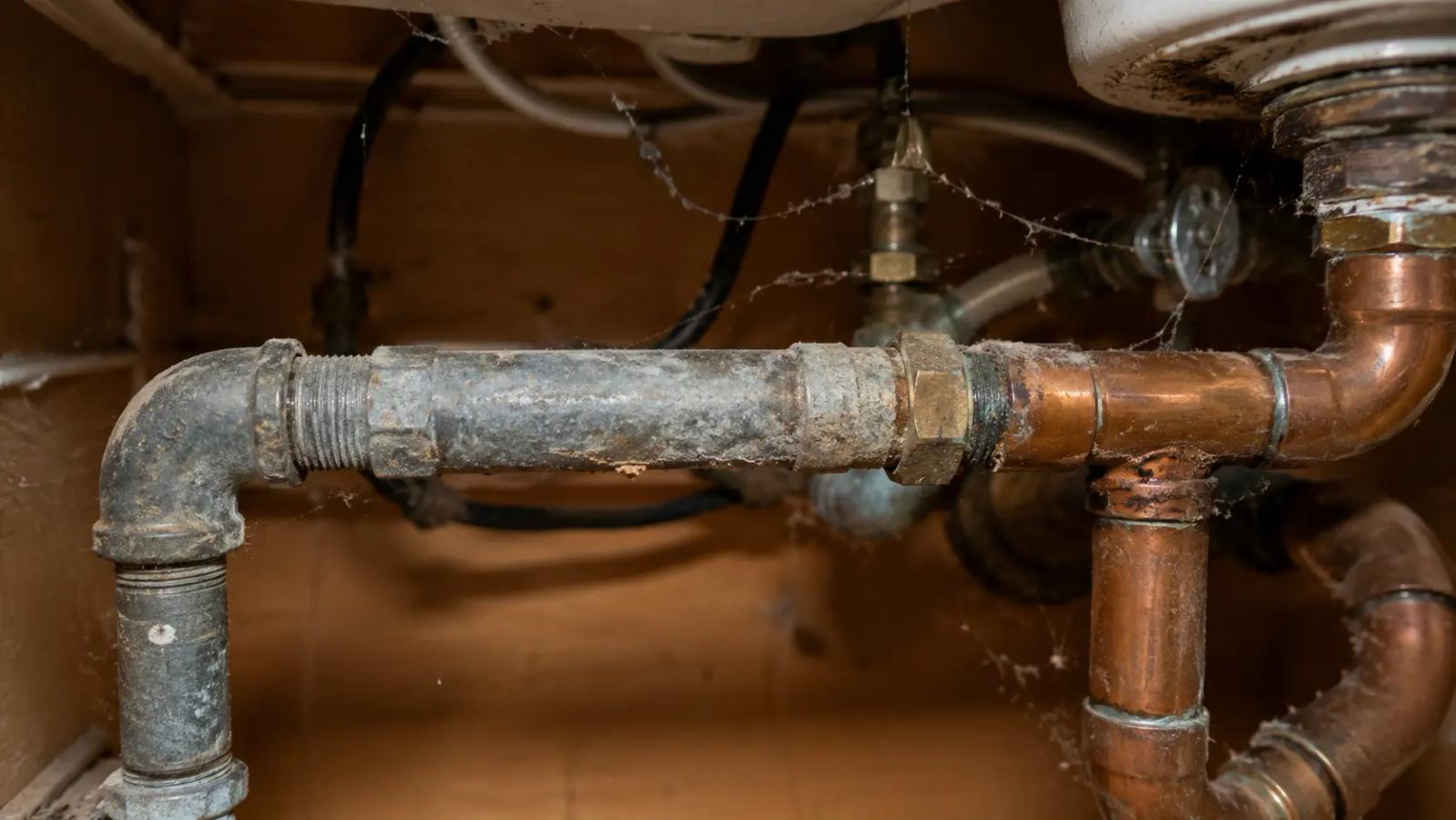
Old houses in this area also carry a wider mix of plumbing eras than people expect. It's common to find a section of original galvanized pipe from the 1950s or 1960s running into a copper repair from the 1980s, feeding a fixture that was updated last year. Every one of those transitions is a potential weak point, and aging plumbing systems built in stages rarely fail all at once. They fail one joint, one section, one fixture at a time, which is exactly why the early signs are easy to miss.
Corroded and Galvanized Pipes
Homes built before the 1960s often still have galvanized steel pipe somewhere in the system, and homes built through the 1980s may have sections of cast iron or, in some cases, polybutylene. None of these materials were bad choices at the time. All of them corrode, rust, or degrade faster than modern piping, and where a galvanized line was ever connected to lead pipe or lead solder, the EPA now requires water systems to identify and replace it because of the lead contamination risk.
Galvanized steel corrodes from the inside out, which means the pipe can look fine on the outside while the interior is closing up with rust and sediment. Polybutylene reacts poorly with chlorine in drinking water and becomes brittle over years of exposure, sometimes failing without much warning. Corrosion doesn't happen overnight. It builds for years before it shows up as a leak, a pressure drop, or discolored water, and that single fixture is rarely the whole story. Whatever caused it has usually been developing inside the walls for years.
If you've never had a plumbing inspection and you're not sure what kind of pipe is running through your walls, that's the first thing worth finding out. A professional plumbing inspection can identify the pipe material in minutes, and knowing what you're working with changes every decision that follows, from repiping timelines to whether a leak is isolated or a warning sign for the rest of the system.
Most old plumbing pipes get replaced with PEX or copper once a homeowner decides to move forward, and both are worth understanding before you commit to one. PEX is flexible, resists corrosion, and is generally faster and less invasive to install, which matters if a full repipe would otherwise mean opening up finished walls. Copper costs more but has a long track record and holds up well over decades. Neither choice is wrong. The right one usually comes down to your home's layout, your budget, and how much of the existing system actually needs to come out, and getting that call right the first time is what keeps a repiping job a one-time project instead of a problem you're revisiting in five years.
Low Water Pressure From Aging Pipes
Low water pressure is one of the most common complaints we hear from owners of older homes, and it's rarely caused by the water main. It's almost always what's happening inside the pipe. Mineral buildup and sediment accumulate on the interior walls of galvanized and older copper pipe over decades, narrowing the space water has to move through. The pipe still carries water. It just carries less of it, and slower.
Corroded pipes are the usual culprit, but not the only one. A leak elsewhere in the system can also drop pressure, since water escaping before it reaches the faucet means less water arrives at the faucet.
If pressure has dropped house-wide rather than at a single fixture, that's usually a sign the issue is systemic rather than local, and it's worth having a plumber trace it rather than assuming it will resolve on its own.
Leaky Pipes, Joints, and Fixtures
Older fixtures wear the way anything mechanical wears. Washers dry out, seals crack, and joints that were tightened decades ago loosen with age and temperature changes. A dripping faucet or a slow leak at a joint feels minor. Left alone, it isn't. Water finds the path of least resistance, and in an older home that often means behind a wall or under a floor where nobody notices until the damage is already done.
The fix for a worn washer or a loose fitting is usually straightforward. The harder cases are leaks inside walls or under foundations, which don't show themselves until there's a stain, a smell, or a spike in the water bill. If you've noticed any of those signs, treat it as a call-a-plumber situation, because the cost of a repair now is almost always smaller than the cost of the water damage it prevents.
Sewer Line Damage and Tree Root Intrusion
Sewer lines in older homes were often made from clay, cast iron, or bituminous fiber pipe, all of which are more vulnerable to cracking, shifting, and collapse than the PVC used today. Add mature trees, which Gwinnett County has no shortage of, and you get the single most common sewer line failure in older neighborhoods: root intrusion. Roots are drawn to the moisture inside a sewer line and will find their way through even a hairline crack, then keep growing until the pipe is partially or fully blocked.

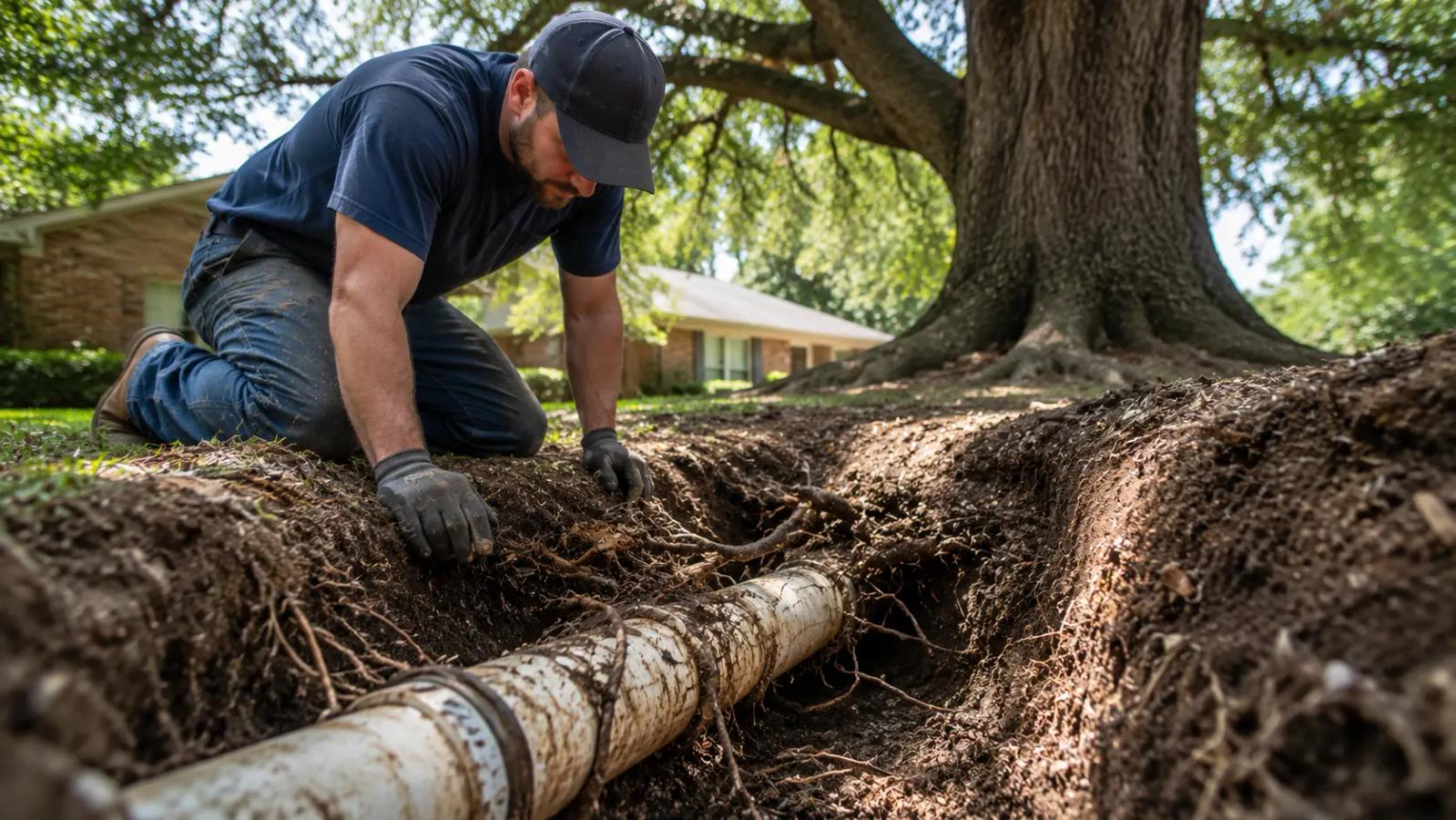
The frustrating part about sewer line damage is that it's invisible until it isn't. Slow drains throughout the house, gurgling sounds, or sewage odor near a floor drain are usually the first signs, and by the time those symptoms show up, the damage has often been developing underground for a while. If you're dealing with recurring clogs that a plunger or drain cleaner won't touch, that's usually not a clog. That's a sewer line telling you something.
Is Your Old Water Heater a Plumbing Problem?
A water heater in an older home is often the clearest sign that the plumbing system hasn't kept pace with the household using it. Tank water heaters installed decades ago were sized for smaller families and lower demand. Run two showers back to back today, or add a dishwasher and washing machine to the same load, and an old tank simply can't keep up. Inconsistent hot water isn't always a heater problem on its own. Often the plumbing system is simply showing its age in the one place homeowners actually notice day to day.

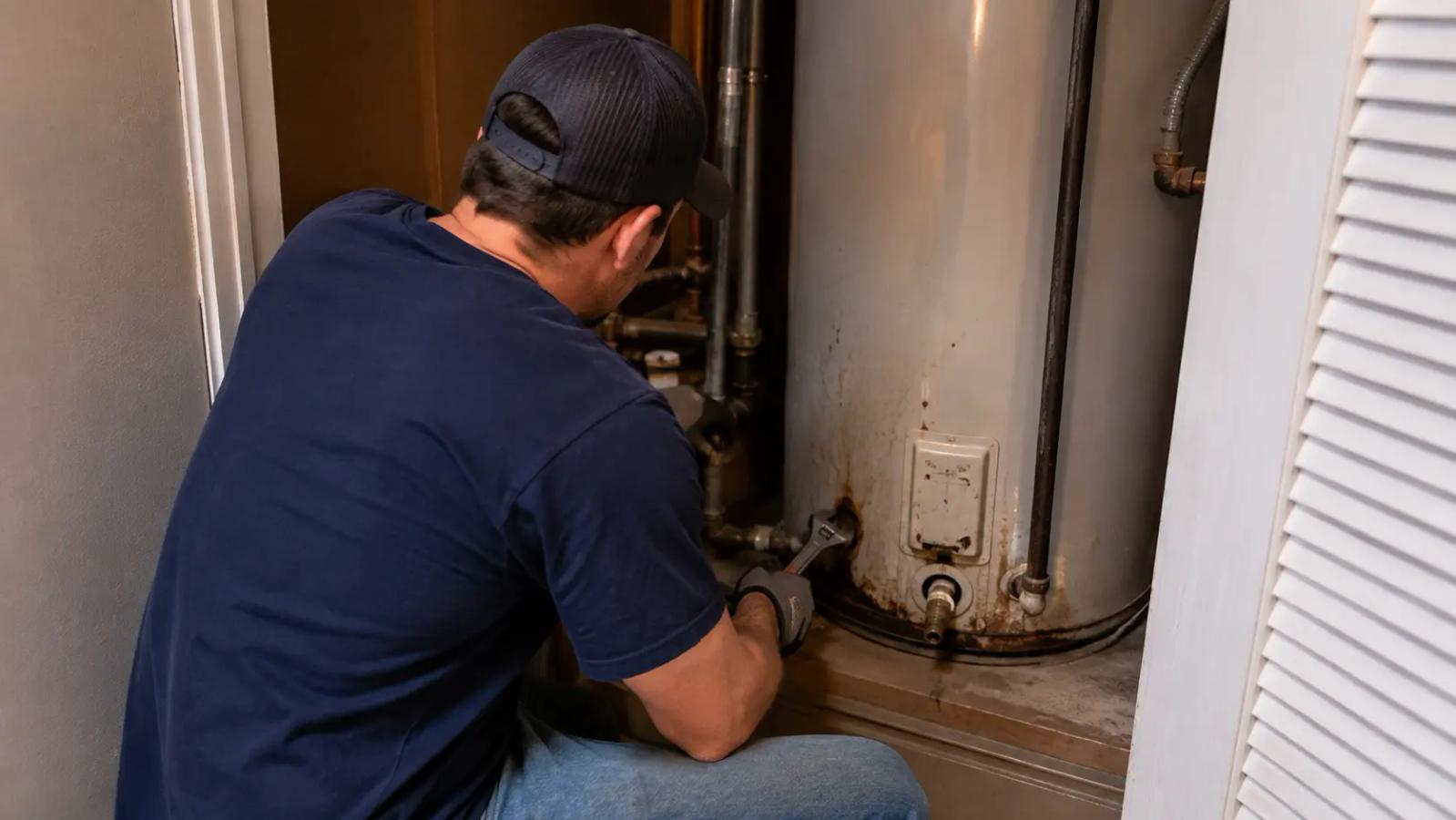
A tankless system simply doesn't run out, and for an older home already dealing with pipe and pressure issues, that reliability is usually what makes upgrading the water heater worth a real conversation. It's one of the few plumbing fixes that immediately improves daily life instead of just preventing a future problem.
DIY Fixes vs. When to Call a Plumber
Some plumbing issues in older homes are genuinely manageable without a professional. A dripping faucet, a slow-draining sink with no other symptoms, or a running toilet are usually a washer, a flapper, or a fitting, and a reasonably handy homeowner can often resolve them with a trip to the hardware store.
Everything else deserves a second look from someone who knows what an older plumbing system is actually doing. Dropped water pressure, recurring clogs, discolored water, or any sign of a leak inside a wall are not DIY territory, because the visible symptom is rarely the actual problem. Fixing what you can see without understanding what caused it just buys time before the same issue comes back, usually worse.
When Should You Get a Plumbing Inspection?
The single most useful thing an owner of an older home can do is stop waiting for a plumbing emergency to find out what's in the walls. A professional plumbing inspection tells you which part of the house to address first, rather than guessing between a fixture that's merely old and a pipe that's actively failing.
If your home was built before the 1980s and you've never had it inspected, that's worth changing before the plumbing system decides to bring it up for you.

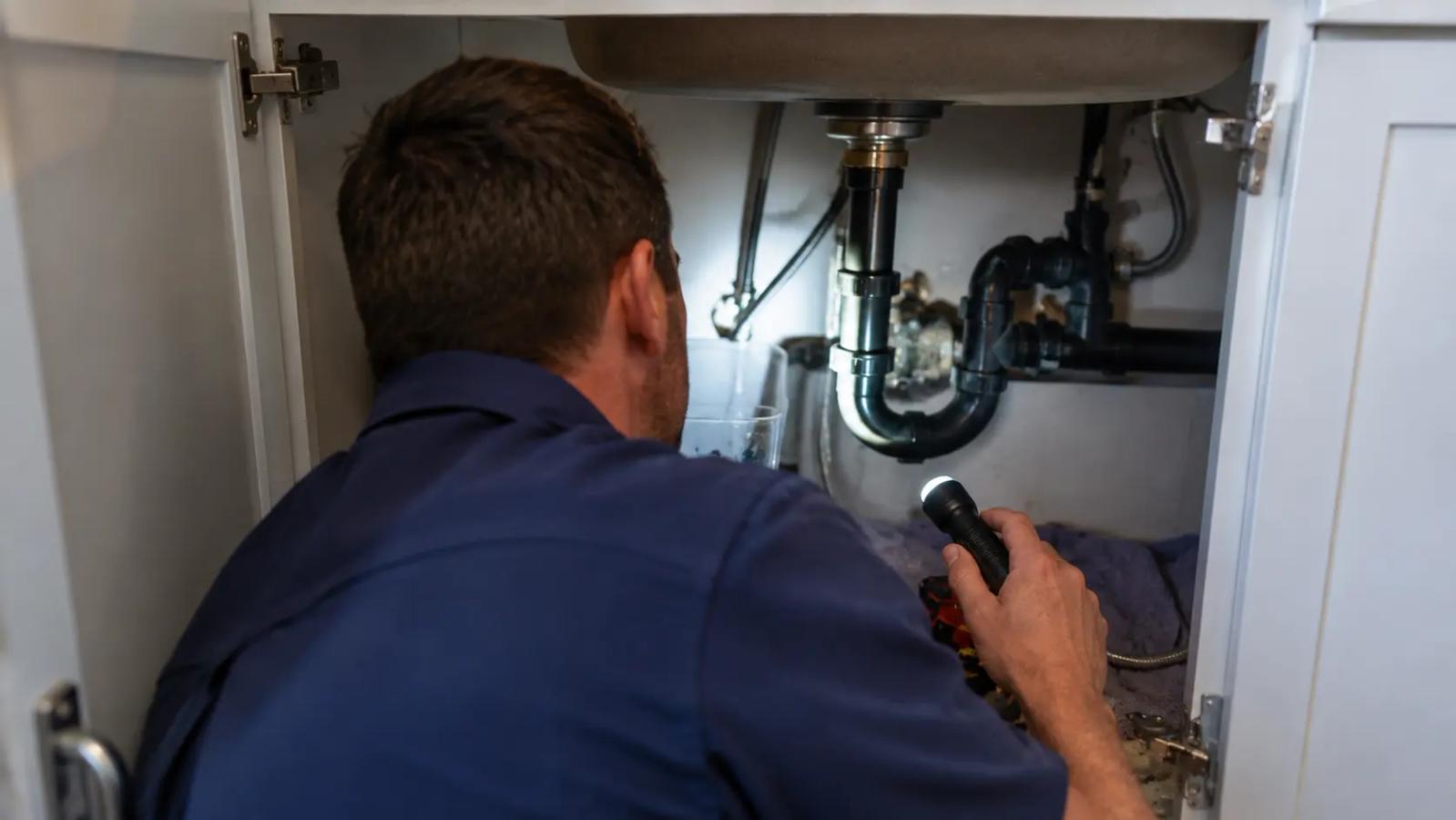
Older homes carry a lot worth protecting, and the plumbing running through the walls is usually the part getting the least attention until it forces the issue. Catch it early, and it's a repair. Catch it late, and it's a renovation.