





How Much Does Main Water Line Repair Cost in Dacula?

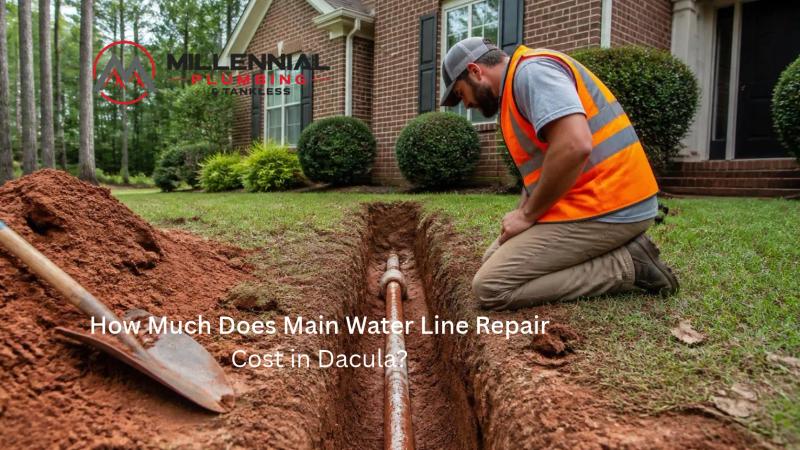
Main water line repair in Dacula costs about $713 on average, based on Georgia figures. That number hides where the money goes: on most of these jobs, the pipe is the cheapest thing in the hole.
Most of your underground water line repair cost goes to what sits on top of it: the lawn, the driveway, the concrete walk, and the hours it takes to reach a pipe nobody has seen since the house was built. And if you live in Gwinnett County, there's a second surprise waiting. Everything on your side of the water meter is your bill, not the county's.
Underground Water Line Repair Cost, From Diagnosis to Repair
Georgia's averages give you a planning number. Here's how water line repair costs break down for homes in Dacula and across the state.
| Stage of the job | Georgia average | What it covers | |
|---|---|---|---|
Diagnosis | $287 | Locating the leak and confirming it's on your side of the meter | |
Repair | $713 | Exposing the damaged section of pipe, fixing it, and pressure testing |
These are statewide averages, useful for planning, not a quote for your property.
The type of failure decides whether you land above or below that $713 average cost to repair. A worn main water shut-off valve or a pinhole leak near the meter box usually sits at the low end. Those jobs cost the least because the repair itself is small and the hole is shallow. A broken pipe section halfway across the yard, or corrosion in more than one spot, pushes the bill above the average.

If the corrosion runs the length of the line, the job stops being a repair and becomes a main water line replacement, with different numbers. Our guide to water line replacement cost covers what a full replacement runs in Dacula.
Georgia's numbers have a quirk. The average diagnostic fee here runs about 29% higher than the national figure, while the repair itself runs about 31% lower. Finding the leak costs more in Georgia. Fixing it costs less. That's a fair trade. The more precisely a leak is pinpointed, the smaller the hole, and the less of your yard gets torn up.
Labor is the biggest line item on almost all water line repairs. Whether a plumber bills by the hour or quotes per linear foot, expect to pay for the digging, the fittings, and putting your yard back together.
Which brings up the real question: why does one homeowner's repair come in well under the Georgia average while their neighbor's runs several times higher?
What Drives Up the Cost of Main Water Line Repair?
Five factors influence the cost of repairs more than anything else.
Where the leak is. A leak three feet from the meter box is a small hole. A leak somewhere along an 80-foot run means finding it first, and finding it can take longer than fixing it.
The depth of the line. Service lines in Georgia sit about 3 feet deep on average, compared with roughly 4.5 feet nationally. That shallower depth is a big part of why repairs here cost less than the national average. Every extra foot still means more digging, wider trenches for safety, and more soil to move and replace. Shallow water lines under grass are the easiest repair in plumbing. A deep one is a small excavation project.
What's on top of it. Grass grows back. Concrete, pavers, and asphalt don't. Restoring a driveway or walkway is a separate cost on top of the plumbing work, and on some jobs that restoration bill rivals the repair itself.
The soil. Gwinnett County sits on red clay. Dry, it digs like brick. Wet, it's heavy, sticky, and slow to backfill properly. Either way, it takes more time than sandy soil, and time is what you're paying for.
Permits and pipe material. Some jobs need a permit, which adds its own fee and an inspection to the timeline. Older homes may also have pipe material that fails in more than one place. If your service line is gray plastic, it's worth asking whether it's polybutylene, an older pipe material with a long track record of failures.
The cost depends on how these stack up, which is why no honest plumber gives an accurate cost over the phone before seeing the property.
How Is a Broken Underground Water Pipe Repaired?
Every underground repair starts with the same problem. The leak is somewhere under a few feet of dirt, and someone has to find it before anyone digs.
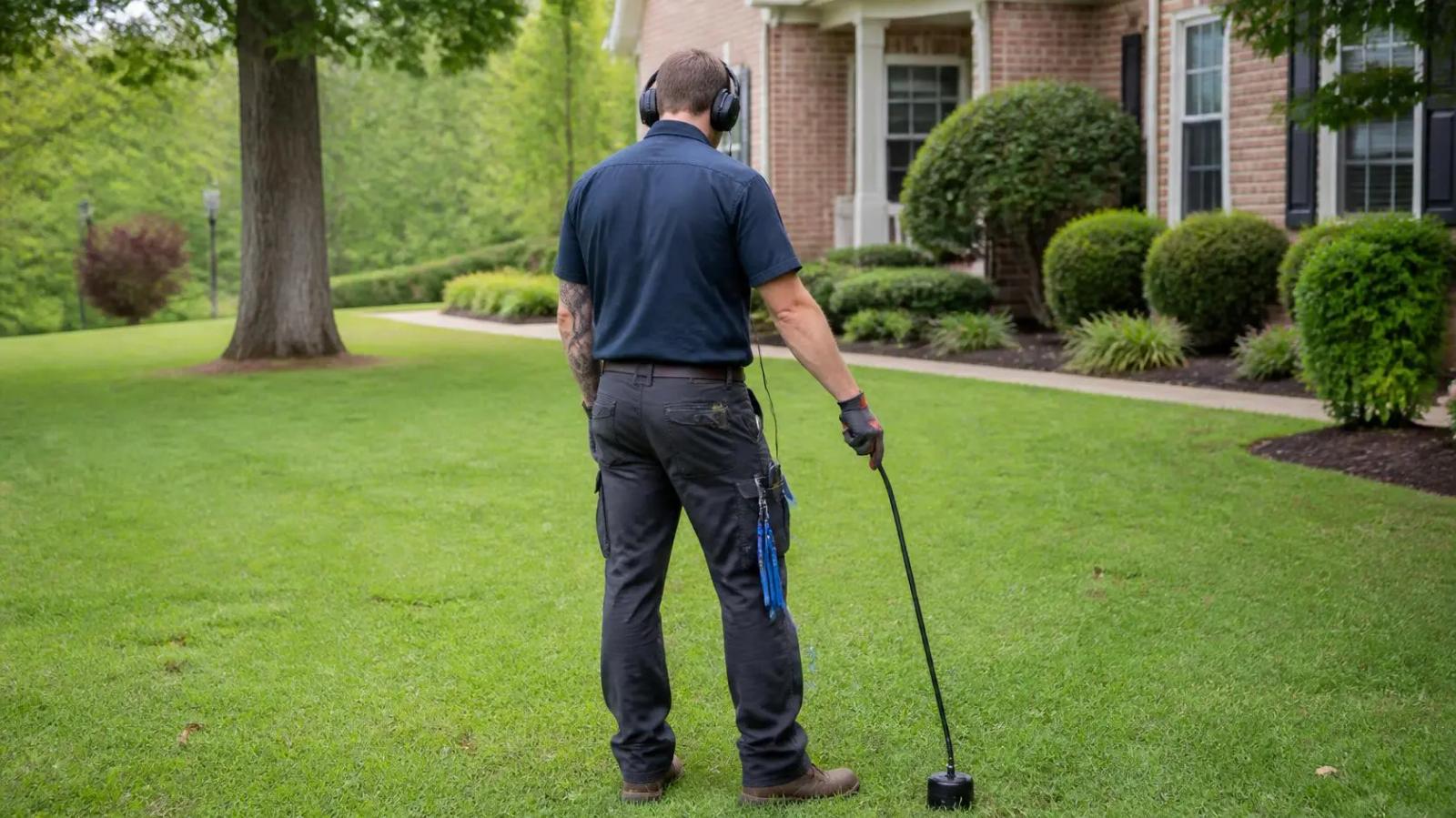
A moving meter proves water is escaping. It doesn't say where. Narrowing it down means walking the line's route from the meter to the house, checking for soft ground, and using leak detection equipment to listen for water escaping under pressure. The tighter that pinpoint, the smaller the hole.

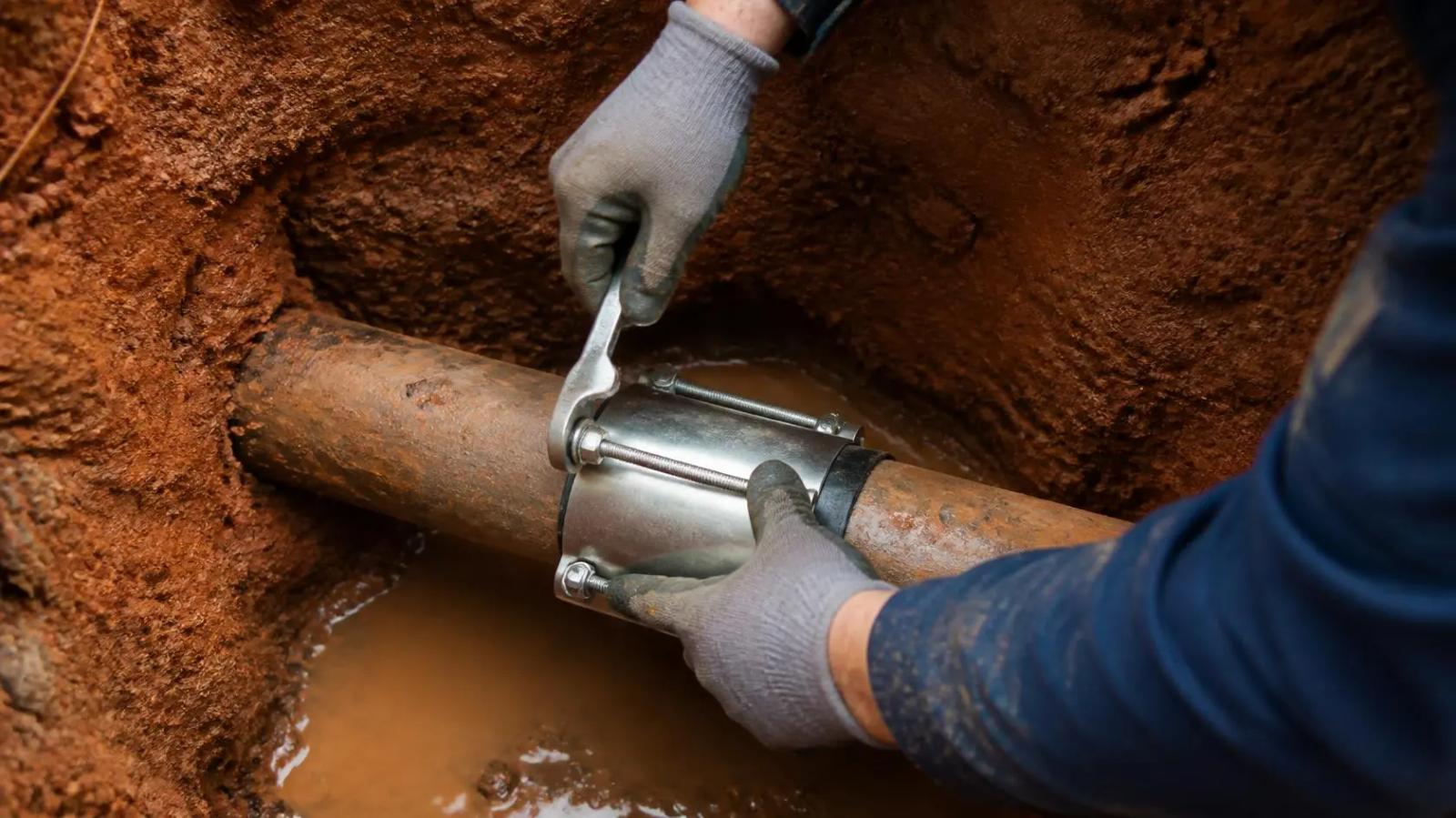
Then the crew digs. The last stretch near the pipe usually comes out by hand, because a shovel blade in the wrong spot makes a second leak.
The fix depends on what failed. A pinhole or short crack can often be sealed with a repair clamp wrapped around the pipe. A split, a crushed section, or a failed fitting means cutting that section of pipe out and splicing in new material, with couplings matched to whatever the line is made of: copper, PVC, or PEX.
Before any dirt goes back in, the water comes back on. The repair sits exposed under full pressure, so a slow weep shows up while it's still easy to reach. Only then is the hole backfilled, compacted in layers so the yard doesn't sink over the repair a month later.
Who Pays for a Water Line Repair in Gwinnett County?
You do, for everything on your side of the meter. Gwinnett County's Department of Water Resources maintains the water main in the street, the short pipe from the main to your meter, and the meter itself. The water service line running from the meter to your house belongs to you, including any stretch that runs beyond your property line toward a meter set in the public right-of-way.

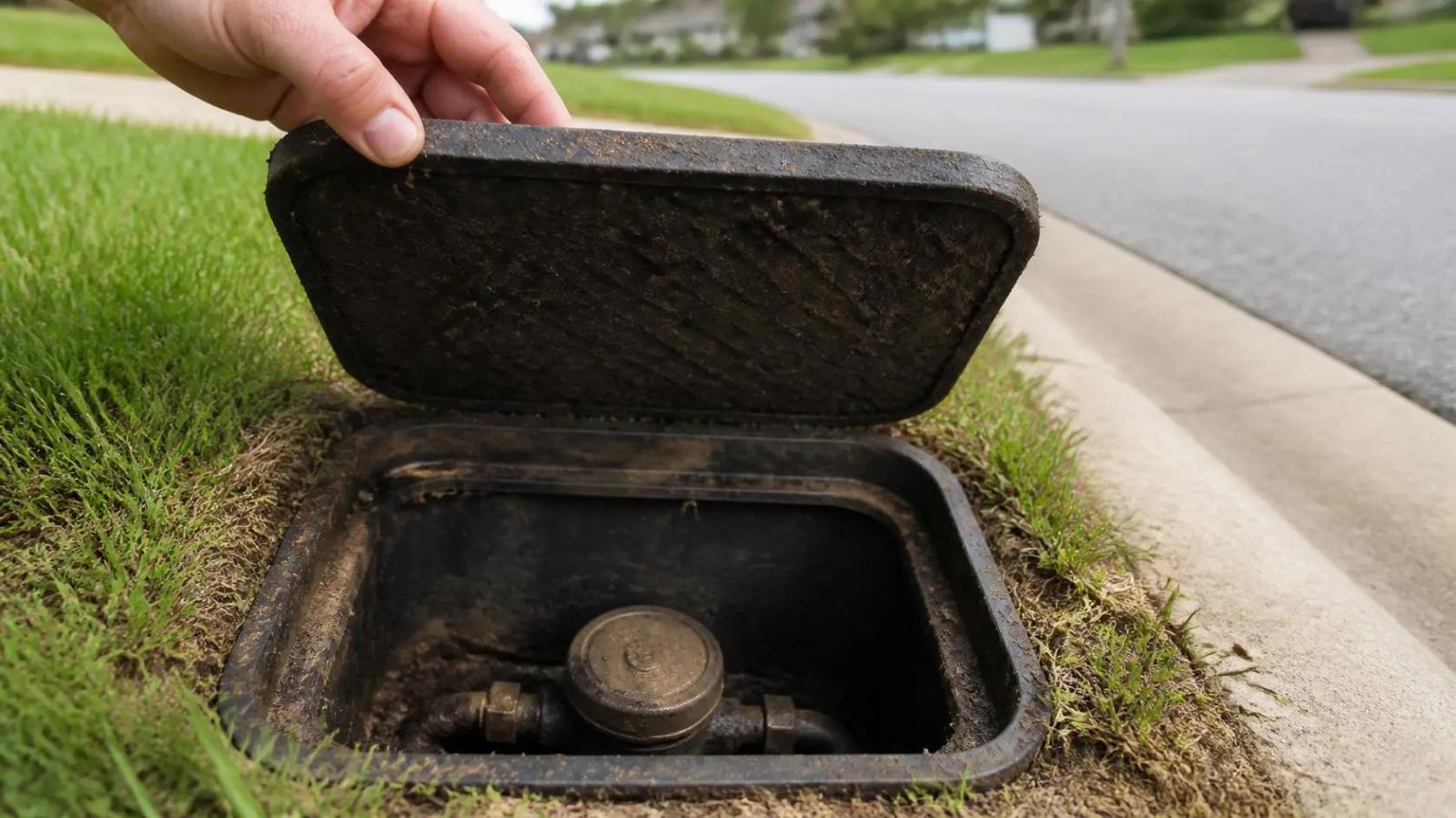
The water that leaks out is on you too, since it runs through your meter first. Gwinnett does accept leak adjustment requests once the repair is done, so hold on to your plumber's paperwork.
On the county's side, the rules flip. A leak inside the meter box or out in the street is the county's to fix, and the Department of Water Resources runs a 24/7 dispatch line at 678-376-7000 for that. If you call the county out for a low-pressure flow test and the problem turns out to be on your side of the meter, Gwinnett charges a $145 service fee for a standard residential meter. You'll still need a plumber.
Before you call anyone, though, it helps to know whether you have a problem at all.
How Can You Tell If Your Water Line Is Leaking Underground?
Leaks in underground water lines rarely announce themselves. The usual signs are a patch of lawn that stays soggy or unusually green in dry weather, a water bill that jumps for no reason, and low pressure at every fixture at once. A less obvious one: the faint sound of running water when every tap is off.
The quickest check is your meter. Turn off every fixture in the house, then watch the meter dial for 15 to 20 minutes. If it moves with nothing running, water is going somewhere it shouldn't.
Small movement adds up fast. For example, a meter that creeps 1 gallon every 10 minutes is losing about 144 gallons a day, more than 4,300 gallons a month, often without a single wet spot you can see. Every one of those gallons runs through your meter, which means you're paying for water that never reaches a tap for as long as the leak runs.
If your meter moves with everything off, that's the moment to have the line checked, before the yard starts showing it.
Low pressure from a service line leak also affects appliances. Tankless water heaters need a minimum flow rate to fire, so a struggling supply line can show up as hot water that cuts in and out long before anything shows up in the yard. If your tankless unit has started acting up and nothing inside the house explains it, the problem may be underground.
Should You Repair or Replace Your Main Water Line?
Repair makes sense when the line is relatively new, the material is sound, and this is the first leak. A single failure on a PEX or copper service line in good condition is usually a one-time fix.

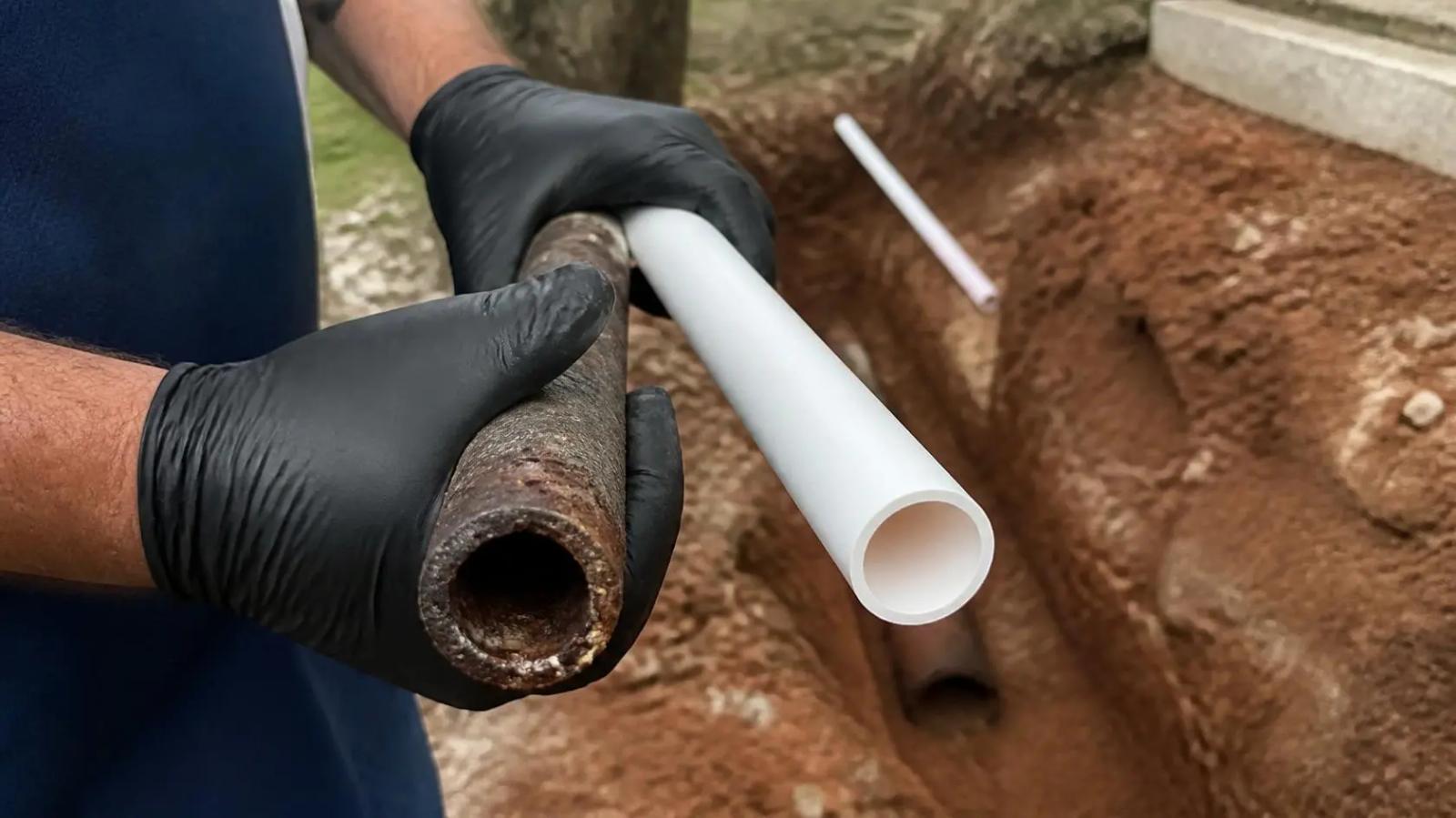
Galvanized steel, polybutylene, or a second leak within a few years points the other way. So does corrosion the plumber finds beyond the spot that failed. Paying to dig up the same yard twice is the most expensive way to handle an aging line.
How Long Does an Underground Water Line Repair Take?
A single-leak repair on an accessible line is often finished in one visit once the leak has been located. A deeper repair, or one under pavement, can run longer depending on access and whether a permit inspection is required.
Before work starts, ask how long your water will be off and how the yard or driveway will be restored afterward.

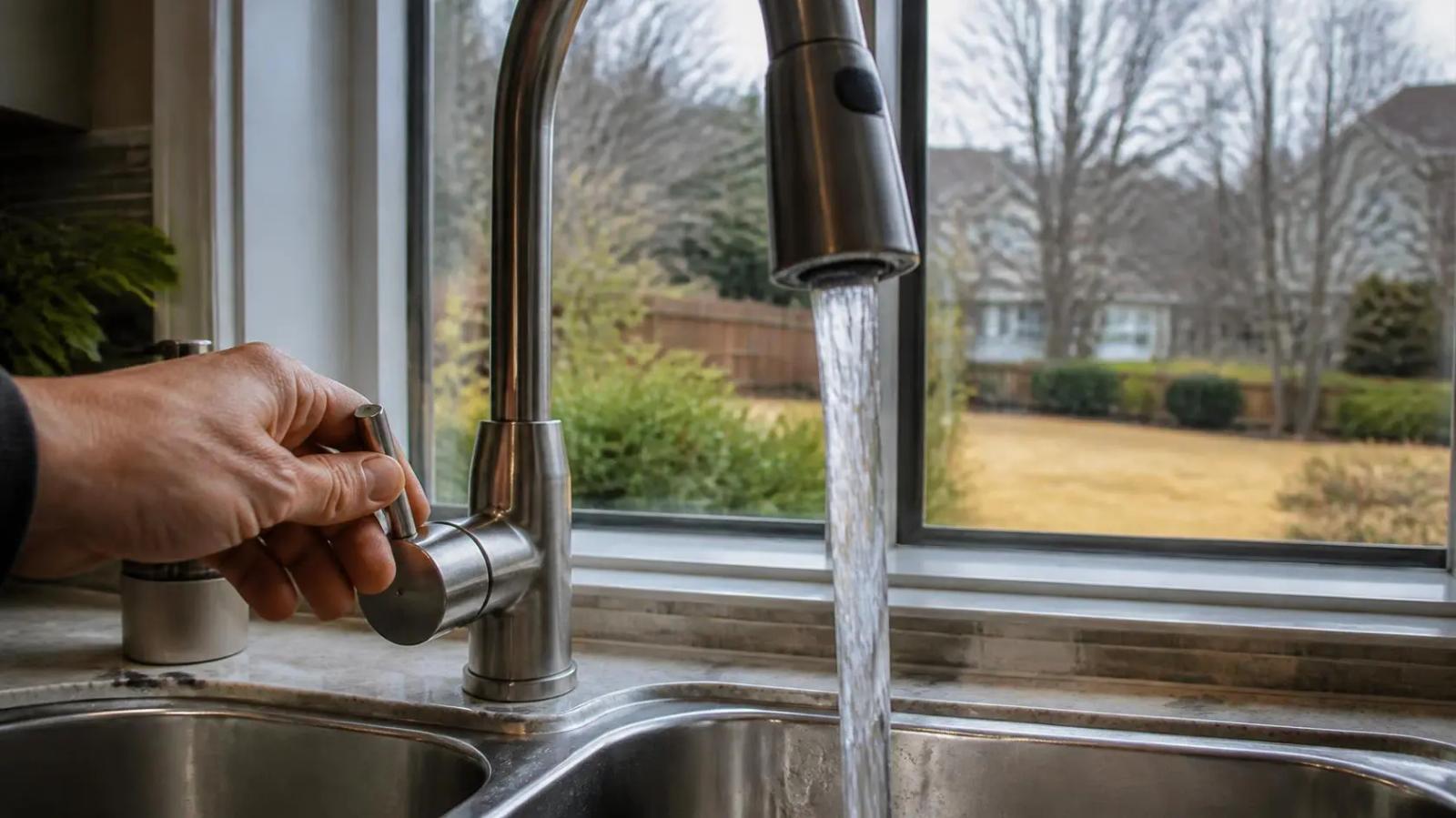
Once water is restored, run your cold taps for a few minutes to flush air and sediment out of the water lines before it reaches fixtures and your water heater.
Does Homeowners Insurance Cover a Main Water Line Leak?
Usually not the pipe itself. Most standard home insurance policies cover sudden water damage inside the house, but treat the service line as your responsibility to maintain. A line that fails from age or corrosion is typically considered wear and tear, which most policies exclude.
Some insurers sell a service line endorsement that covers underground water lines on your property, including excavation, and standalone line protection plans exist too. Coverage limits and exclusions vary widely, so read the terms before relying on either.
Call your insurer before the work starts. If the policy does cover water line repair, they'll want documentation, and photos of the excavated pipe and the leak point are far easier to take before the hole is backfilled.
Can You Fix an Underground Water Line Yourself?
Plumbers fix underground pipes every week, and there's a reason homeowners rarely attempt it. Before any mechanized digging, Georgia law requires a locate request through Georgia 811, by calling 811 or 800-282-7411, at least 48 hours but no more than 10 working days ahead. The catch: 811 only marks public utilities. The water line between your meter and your house is a private line, so it won't be marked, and neither will irrigation, landscape lighting, or other private lines in the same yard as your water lines. Finding those takes a private utility locator or a plumber with line-tracing equipment.
Then comes the whole repair process above, done in a wet hole with water pressure behind every joint.

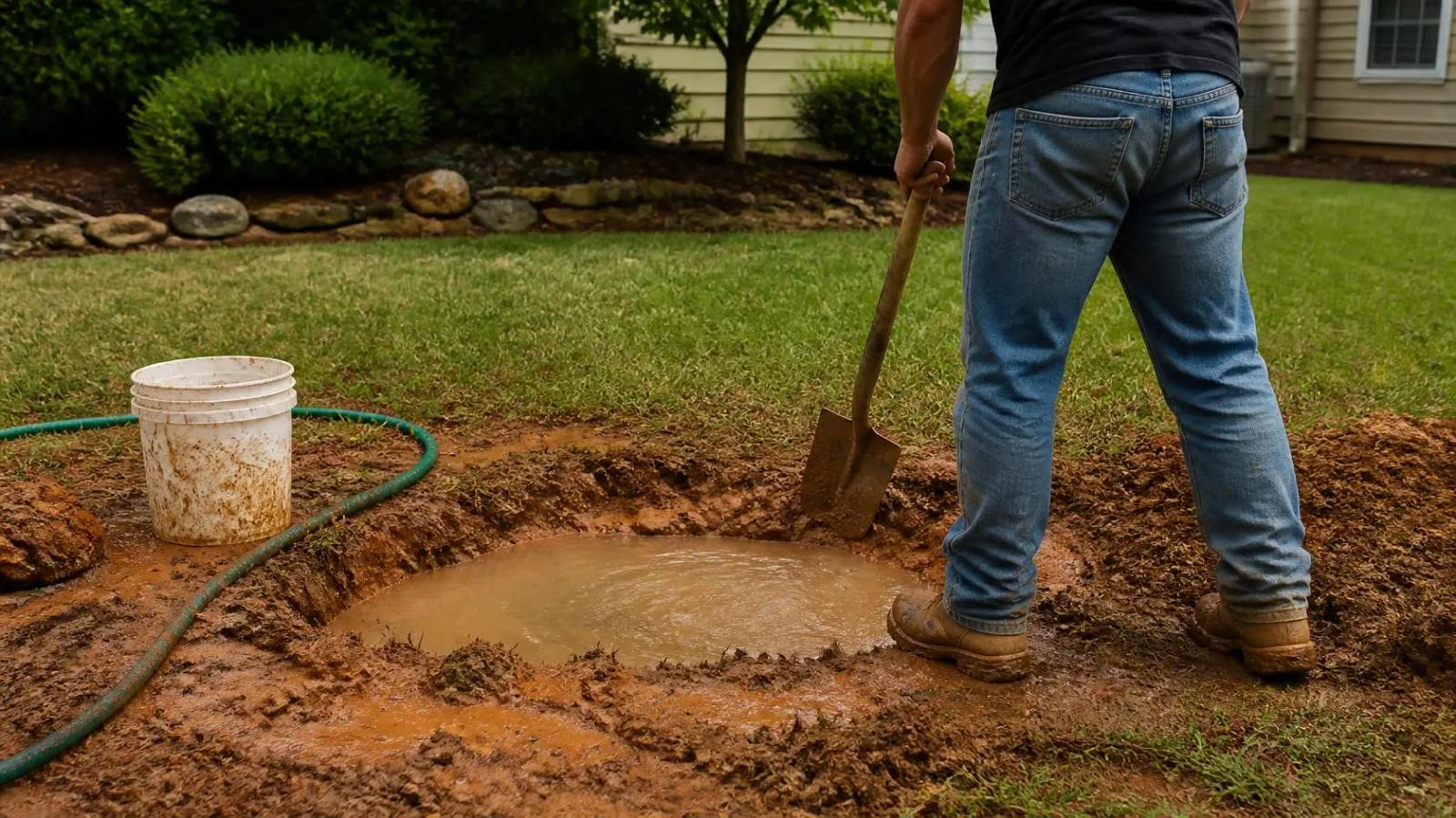
A failed connection on an underground water pipe doesn't drip where you can see it. It leaks quietly into the soil for weeks. Your bill climbs the whole time, until the fix costs more than calling a plumber would have. This is one pipe repair where a licensed plumbing service earns its cost.
Who Do You Call for Main Water Line Repair in Dacula?
The cheapest underground repair is the one caught early, before a slow leak turns into a soggy yard and a line that has to come out entirely.
If you're seeing any of the signs above in Dacula or anywhere across Gwinnett County, one call to Millennial Plumbing & Tankless at 470-727-6292 gets you a clear answer: where the water is going, whether it's a repair or a replacement, and what it will take before any digging starts. That's 25 years of hands-on experience reading these lines.